You can move on a budget without cutting corners if you plan early. Moving can become expensive because the costs arrive from many directions at once: deposits, packing materials, transport, movers, temporary storage, utility setup, cleaning, and replacement household items. The best way to move on a budget is to plan early and reduce the volume of what you move before shopping for services.
This guide shows how to move on a budget by cutting costs at every stage, from decluttering to move-out day.

Saving money should not mean taking unnecessary risks with heavy lifting, unsafe vehicles, unverified movers, or important possessions. Focus on eliminating waste and choosing the right level of help.
Create a Complete Moving Budget
Start with a list of every likely cost rather than estimating only the truck or movers. Include packing supplies, transportation, fuel, tolls, parking, labor, storage, cleaning, utility setup, insurance, meals, temporary lodging, childcare or pet care, and time away from work.
Add a small contingency because moving days often produce unexpected expenses.
Move Less Stuff
Reducing the number of belongings is one of the most reliable ways to save. Fewer items mean fewer boxes, less labor, a smaller vehicle, and less storage.
Sort belongings into keep, sell, donate, recycle, and discard categories. Start with bulky items that are cheap to replace but expensive to transport.
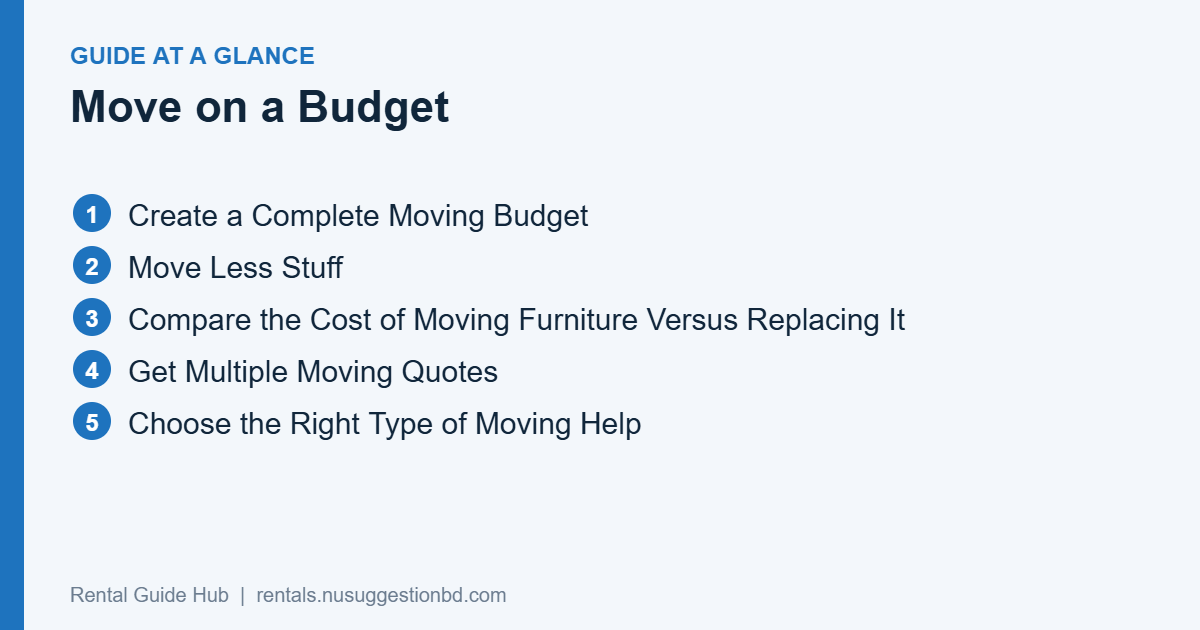
Compare the Cost of Moving Furniture Versus Replacing It
A low-value sofa or damaged bookcase may cost more to move across a long distance than to replace after arrival.
This is especially relevant if you are deciding between furnished and unfurnished housing. Read Furnished vs Unfurnished Apartments: Which Is Better? before paying to move large items you may not need.
Get Multiple Moving Quotes
If using professional movers, compare written estimates from more than one reputable company. Ask what is included, what can create extra charges, how time is calculated, and what insurance or valuation options apply.
A quote that is dramatically lower than every other option deserves additional scrutiny.
Choose the Right Type of Moving Help
Full-service movers are convenient but can be expensive. Alternatives include renting a vehicle, hiring labor only for loading and unloading, using a moving container, or combining professional help with self-packing.
The best option depends on distance, stairs, heavy furniture, physical ability, time, and vehicle access.
Move During Lower-Demand Times When Possible
Prices may be higher on weekends, holidays, month-end periods, and popular moving seasons. If your lease dates allow flexibility, ask whether a different day produces lower rates.
Do not create extra rent overlap or temporary lodging costs solely to chase a small moving discount.
Find Low-Cost Packing Supplies
Ask local stores, workplaces, friends, or community groups whether clean boxes are available. Reuse containers you already own, such as suitcases, bins, baskets, and bags.
Do not use damaged boxes for fragile or heavy items. Saving a small amount on a weak box is not worth damaging valuable belongings.
Use Clothing and Linens as Packing Material
Towels, blankets, socks, and clothing can protect non-fragile items and reduce the amount of bubble wrap you buy.
For highly fragile or valuable objects, use appropriate protective materials.
Pack Yourself
Professional packing can be convenient but adds significant labor cost. If time allows, pack most ordinary items yourself and reserve professional help for fragile, oversized, or specialty items.
Label every box to reduce time spent searching and unloading.
Avoid Last-Minute Purchases
Small moving items become expensive when bought under pressure. Purchase tape, labels, cleaning supplies, water, and basic food in advance.
Keep tools and chargers accessible rather than accidentally packing them deep inside the truck.
Plan Food for Moving Day
Takeout and delivery can add up when your kitchen is packed. Prepare simple food, snacks, and water.
If the move is long distance, budget meals realistically instead of assuming you will spend nothing.
Cancel or Transfer Services Early
Check whether utilities, internet, gym memberships, parking, storage, or other local services require notice.
Avoid paying for services at both locations longer than necessary.
Measure Before Moving Large Furniture
A piece of furniture that does not fit through the new doorway or inside the room creates wasted moving expense.
Measure key spaces and compare them with large items before transport.
Avoid Unnecessary Storage
Storage can become a long-term monthly cost. If you use it temporarily, know the monthly rate, access fees, insurance terms, and how long you realistically plan to keep it.
Sometimes selling lower-value items is cheaper than storing them.
Protect Your Security Deposit
A refundable deposit can be an important part of your moving budget. Follow move-out cleaning requirements, repair tenant-caused damage where appropriate, return keys, and keep photos and records.
Buy New Household Items Gradually
Moving creates pressure to make the new apartment look finished immediately. Prioritize essential items and delay decorations, extra furniture, and convenience appliances.
The First Apartment Moving Checklist: What to Do Before Move-In Day separates true necessities from items that can wait.
Do Not Overspend Just Because You Saved on Rent
A lower monthly rent is helpful only if the move itself does not create unmanageable debt. Review the complete housing budget using Rent vs. Income: How Much Rent Can You Realistically Afford?.
Verify Moving Companies
In the United States, interstate movers are regulated by the Federal Motor Carrier Safety Administration. Consumer information and mover lookup tools are available at https://www.fmcsa.dot.gov/protect-your-move.
Verify companies before paying large deposits and keep written estimates and contracts.
Official Resources for Move on a Budget
- FMCSA: Protect Your Move
- USPS: Change of address
- Consumer Financial Protection Bureau: Budgeting and money tools
More Guides Related to Move on a Budget
- First Apartment Moving Checklist: What to Do Before Move-In Day
- How to Plan a Smooth Apartment Move Without Last-Minute Stress
- Moving Into a Smaller Apartment: How to Downsize Smartly
Move on a Budget at a Glance
To move on a budget, cut costs at every stage, from decluttering to choosing a move date. Anyone who wants to move on a budget should compare quotes early.
Frequently Asked Questions About Move on a Budget
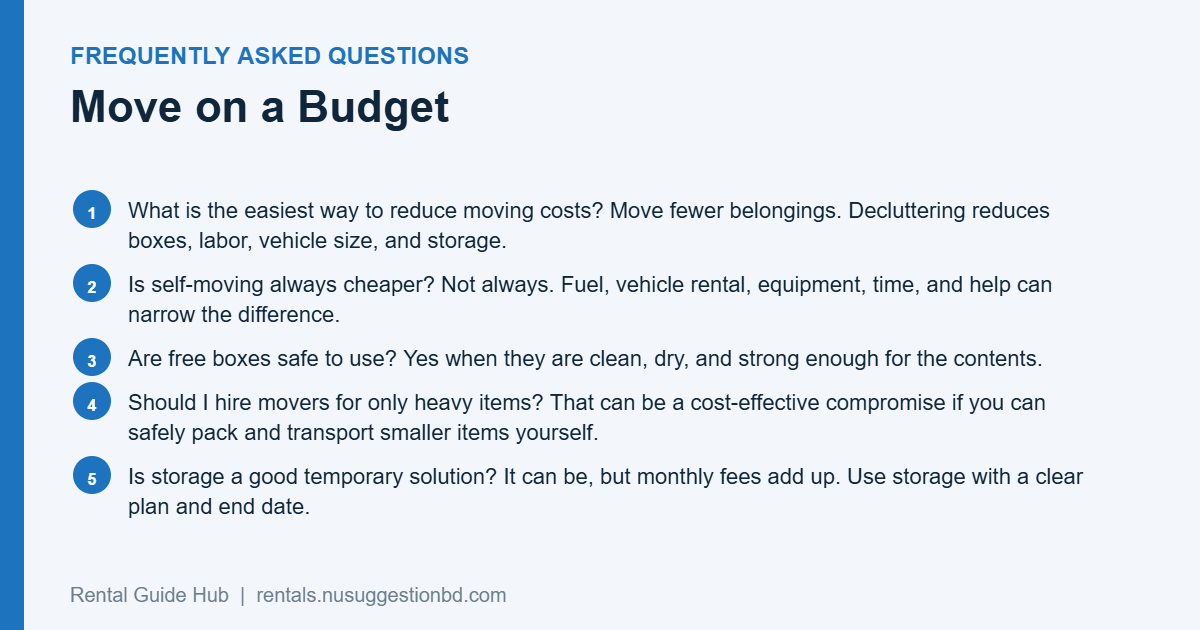
What is the easiest way to reduce moving costs?
Move fewer belongings. Decluttering reduces boxes, labor, vehicle size, and storage.
Is self-moving always cheaper?
Not always. Fuel, vehicle rental, equipment, time, and help can narrow the difference.
Are free boxes safe to use?
Yes when they are clean, dry, and strong enough for the contents.
Should I hire movers for only heavy items?
That can be a cost-effective compromise if you can safely pack and transport smaller items yourself.
Is storage a good temporary solution?
It can be, but monthly fees add up. Use storage with a clear plan and end date.
Where should I start with move on a budget?
Start with the section on “Create a Complete Moving Budget”, then move on to “Move Less Stuff” and keep short notes as you work through this move on a budget guide.
Final Verdict on Move on a Budget
The most effective moving budget cuts waste rather than safety. Declutter first, compare legitimate services, pack ordinary items yourself, move at a sensible time, and delay nonessential purchases. A well-planned move can save substantial money without turning moving day into an unnecessary risk. Keep this move on a budget guide handy as a checklist the next time you compare options.