Furnished vs unfurnished apartments is one of the first choices every renter faces. Choosing between a furnished and unfurnished apartment is usually a question of time, flexibility, and total cost. A furnished rental can make moving dramatically easier, especially for temporary assignments, students, newcomers, or people relocating with limited belongings. An unfurnished apartment often gives long-term renters more control and can be less expensive over time.
This guide compares furnished vs unfurnished apartments on cost, comfort, flexibility and lease terms.
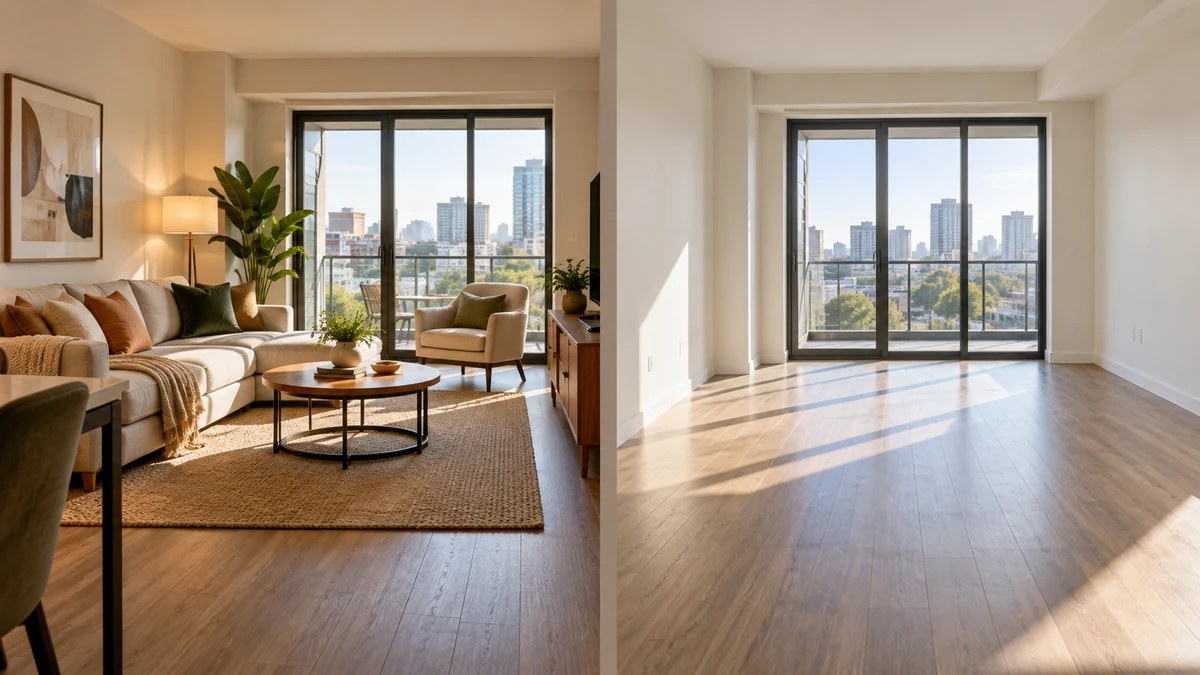
The right choice depends on how long you expect to stay, what furniture you already own, and how much convenience is worth to you.
What Does Furnished Usually Mean?
There is no universal list of items that every furnished rental must include. A typical furnished apartment may have a bed, sofa, dining table, chairs, basic storage, and major appliances. Some also include cookware, dishes, linens, lamps, televisions, or internet.
Because the term can vary, always ask for an inventory. Our guide What Is Included in a Furnished Apartment? Complete Checklist explains what to verify before signing.
Advantages of Furnished Apartments
The main benefit is convenience. You can often move in with clothing and personal items instead of buying, transporting, assembling, and later reselling furniture.
This is valuable for short assignments, internships, study programs, temporary work, trial relocations, and people who are not ready to commit to a permanent home setup.
Furnished rentals can also reduce the cost of movers, truck rental, and large-item transportation.
Disadvantages of Furnished Apartments
Furnished units often have higher rent because the owner provides and maintains more items. You may also have less control over style, layout, and comfort.
Furniture can take up space you would prefer to use differently. If the rental inventory is damaged, unclear, or heavily worn, it can create disputes at move-out.
Advantages of Unfurnished Apartments
Unfurnished rentals are usually better for people who already own furniture or expect to stay for a long time. You can choose your own bed, sofa, storage, work desk, and decor.
Over a longer tenancy, buying affordable furniture may cost less than paying a monthly furnished premium.
Disadvantages of Unfurnished Apartments
The initial setup cost can be high. Even basic items such as a bed, table, seating, curtains, lamps, cookware, and storage can add up quickly.
Moving is also more complicated. You may need a truck, movers, packing supplies, and help with assembly.
The How to Move on a Budget: Practical Ways to Cut Moving Costs guide can help if you choose an unfurnished unit.
Compare the Total Cost Over Your Expected Stay
Do not compare rent alone. Estimate the total cost for the period you realistically expect to live there.
For a furnished unit, include rent, deposits, cleaning fees, utilities, and any service premiums.
For an unfurnished unit, include rent plus furniture purchases, delivery, moving expenses, assembly, and eventual storage or resale.
A furnished apartment may cost more per month but still be cheaper for a three-month stay. An unfurnished unit may become better value over one or two years.
Consider Lease Flexibility
Furnished rentals are often associated with shorter or more flexible lease terms, although that is not always true. Confirm the lease length, renewal terms, notice requirements, and any early termination conditions.
Shorter flexibility can be valuable when your job, study program, or relocation plans are uncertain.
Think About Furniture Quality
A furnished apartment is only convenient if the items are usable. Inspect the mattress, seating, dining furniture, storage, and appliances.
Ask who is responsible if provided furniture breaks through normal use and how replacement requests are handled.
Check the Inventory Carefully
An inventory list should identify the major items included with the property. If possible, review it before signing and compare it with the actual apartment during move-in.
Take dated photos of existing wear or damage and follow the property’s move-in documentation process.
Consider Personal Comfort
Some people are comfortable using provided furniture. Others strongly prefer their own mattress, desk chair, kitchen equipment, or storage.
If you work from home, a furnished unit without a proper work area may not be as practical as it first appears.
Think About Moving Distance
For a local move, transporting your own furniture may be manageable. For an international or cross-country move, shipping large items can be expensive and slow.
In that situation, a furnished apartment may simplify the transition while you learn the new area.
Storage Can Change the Calculation
If you already own furniture, choosing a furnished unit may require paying to store your belongings. Storage costs can eliminate much of the convenience.
Compare storage, insurance, transportation, and retrieval costs before deciding.
Are Furnished Rentals Better for First-Time Renters?
They can be, especially if a renter does not yet own household items. But first-time renters should still compare the monthly premium with the cost of buying basic furniture.
The First Apartment Moving Checklist: What to Do Before Move-In Day helps organize both furnished and unfurnished moves.
Legal and Lease Considerations
Responsibilities for furniture, deposits, damage, and move-out condition vary by location and lease. Read the inventory and damage terms carefully.
For general U.S. rental information, see https://www.usa.gov/rental-housing.
Official Resources for Furnished vs Unfurnished Apartments
- HUD: Tenant rights, laws and protections
- FTC: Consumer advice
- Consumer Financial Protection Bureau: Budgeting and money tools
More Guides Related to Furnished vs Unfurnished Apartments
- What Is Included in a Furnished Apartment? Complete Checklist
- Furniture Rental vs Buying 2026: Smart Budget Guide
- Short-Term Furnished Rentals: What to Check Before Booking
Furnished vs Unfurnished Apartments at a Glance
Furnished vs unfurnished apartments comes down to cost, flexibility and how long you will stay. Revisit furnished vs unfurnished apartments whenever your plans change.
Frequently Asked Questions About Furnished vs Unfurnished Apartments
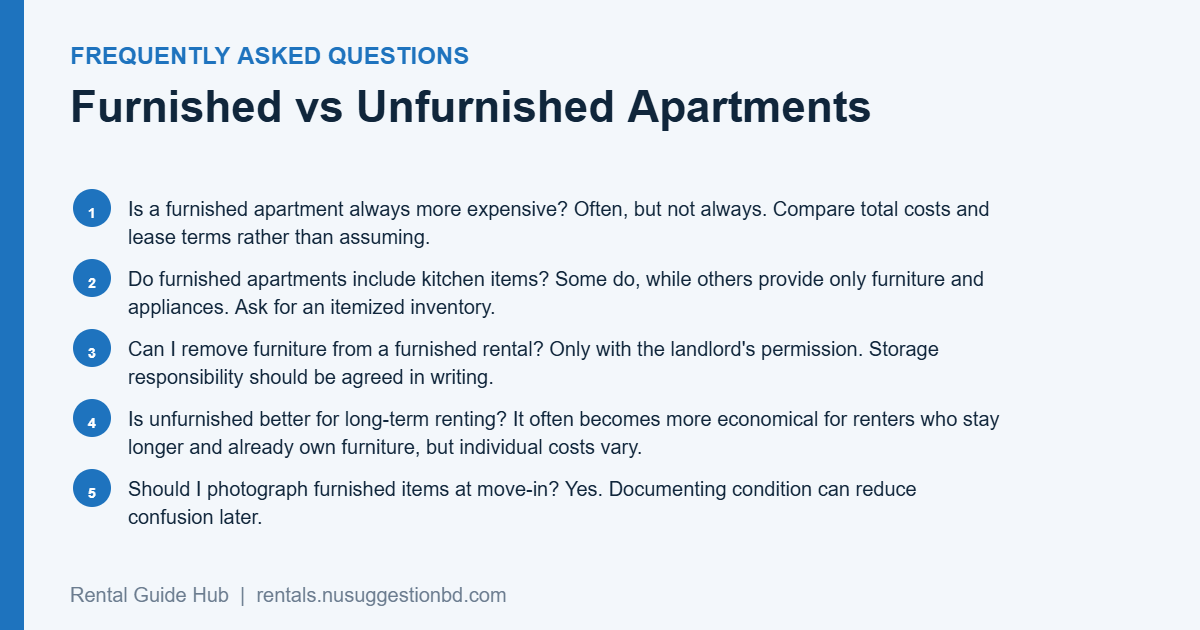
Is a furnished apartment always more expensive?
Often, but not always. Compare total costs and lease terms rather than assuming.
Do furnished apartments include kitchen items?
Some do, while others provide only furniture and appliances. Ask for an itemized inventory.
Can I remove furniture from a furnished rental?
Only with the landlord’s permission. Storage responsibility should be agreed in writing.
Is unfurnished better for long-term renting?
It often becomes more economical for renters who stay longer and already own furniture, but individual costs vary.
Should I photograph furnished items at move-in?
Yes. Documenting condition can reduce confusion later.
Where should I start with furnished vs unfurnished apartments?
Start with the section on “What Does Furnished Usually Mean?”, then move on to “Advantages of Furnished Apartments” and keep short notes as you work through this furnished vs unfurnished apartments guide.
Final Verdict on Furnished vs Unfurnished Apartments
Choose furnished when convenience, temporary housing, or a long-distance move matters more than customization. Choose unfurnished when you expect to stay longer, already own furniture, or want full control over your home setup. The best comparison is based on the total cost for your expected stay, not just the monthly rent. Keep this furnished vs unfurnished apartments guide handy as a checklist the next time you compare options.