A first apartment moving checklist turns a stressful move into a series of small steps. Moving into a first apartment is exciting, but the number of small tasks can become overwhelming. A checklist helps you separate what must happen before the move from what can wait until after you are settled.
This first apartment moving checklist covers the budget, paperwork, utilities and essentials to sort before move-in day.

The most important goals are simple: make sure the lease and payments are documented, confirm utilities and access, protect your belongings, record the condition of the apartment, and bring the essentials you need for the first night.
Two to Four Weeks Before Move-In
Start by confirming the lease start date, key collection process, move-in hours, parking instructions, and any building rules for movers or elevators.
If the building requires an elevator reservation, insurance certificate from movers, loading-dock access, or a security deposit for common areas, arrange it early.
Create a moving budget before booking services. If costs are higher than expected, see How to Move on a Budget: Practical Ways to Cut Moving Costs.
Set Up Utilities
Ask the landlord which utilities you must place in your name. This may include electricity, gas, water, internet, or other services.
Schedule activation close to the lease start so you are not paying far in advance but still have essential services on move-in day.
Keep confirmation numbers and account details together.
Arrange Internet Early
Installation appointments can be limited in busy periods. If you work or study from home, schedule internet before or soon after move-in.
Confirm that your chosen provider actually serves the exact address and unit.
Update Your Address
Make a list of organizations that need your new address. Typical examples include employers, banks, insurance providers, subscriptions, government services, schools, healthcare providers, and important personal contacts.
Use official address-change procedures where available.
Decide How You Will Move
Compare self-moving, rental vehicles, labor-only help, and full-service movers. Price is important, but so are distance, heavy items, stairs, parking, and the value of your time.
If using a moving company, verify the company, understand pricing, and keep written estimates.
Sort Before Packing
Moving items you no longer want wastes time and money. Donate, sell, recycle, or dispose of unnecessary belongings before packing.
For a first apartment, avoid buying too much before you understand the space.
Pack by Room and Priority
Label boxes with the room and a short description. Keep immediate-use items separate so you do not need to open everything on the first night.
A simple “first night” bag can include clothing, toiletries, medication, chargers, important documents, basic food, water, towels, bedding, and cleaning supplies.
Protect Important Documents
Keep identification, lease documents, payment receipts, insurance information, employment papers, and valuable personal records with you rather than inside a moving truck.
Digital copies can provide an additional backup.
Confirm Renter’s Insurance
Some landlords require renter’s insurance. Even when optional, it can protect personal property and provide liability coverage depending on the policy.
Review coverage, exclusions, deductible, and effective date with the insurer.
Prepare Basic Cleaning Supplies
Even if the unit is professionally cleaned, you may want paper towels, trash bags, disinfectant, dish soap, sponge, broom, mop, and bathroom supplies.
Do not unpack everything before you have a chance to clean surfaces you will use immediately.
Essential First Apartment Items
Start with basics rather than trying to furnish every room at once. Priorities usually include a safe place to sleep, lighting, shower supplies, towels, basic cookware, plates, cups, utensils, trash bins, laundry supplies, and simple storage.
You can add decor and nonessential appliances gradually.
Move-In Day: Inspect Before Unpacking
Walk through the apartment before boxes fill the rooms. Check walls, floors, windows, doors, locks, appliances, plumbing, fixtures, and any provided furniture.
Take dated photos and videos of existing damage or wear.
Our Apartment Hunting Checklist: What to Check Before You Apply is also useful as a move-in inspection reference.
Complete the Condition Report
If your property provides a move-in condition form, complete it carefully and return it within the required time.
Keep a copy. This can be important when the security deposit is reviewed at move-out.
Read our Rental Application Guide: Documents, Fees, and Approval Steps for more on documentation.
Test Keys and Access
Make sure your unit keys, mailbox key, gate remote, garage access, building fob, and intercom work.
Ask how replacement keys are handled and whether there are charges.
Locate Safety Equipment
Identify smoke alarms, carbon monoxide alarms where applicable, fire exits, extinguishers, and emergency contact instructions.
If something appears missing or nonfunctional, notify management promptly.
Unpack in the Right Order
Start with the bed, bathroom, kitchen basics, and work or school essentials. These areas make the apartment functional quickly.
Decorations, books, seasonal items, and nonessential storage can wait.
Avoid Large Purchases Immediately
Living in the apartment for a week or two helps you understand the space. You may discover that a smaller table, different storage system, or another type of seating works better than what you originally planned.
Learn the Building
Find trash and recycling areas, laundry facilities, package procedures, parking spaces, emergency exits, and shared amenities.
Introduce yourself to building staff if appropriate and learn how to submit maintenance requests.
Keep Receipts and Records
Store your lease, payment confirmations, condition report, photos, insurance records, utility setup, and important landlord communication in one digital folder.
Good records are easier to maintain from the beginning than to reconstruct later.
For U.S. rental guidance, see https://www.usa.gov/rental-housing.
Official Resources for First Apartment Moving Checklist
- FMCSA: Protect Your Move
- USPS: Change of address
- Consumer Financial Protection Bureau: Budgeting and money tools
More Guides Related to First Apartment Moving Checklist
- How to Move on a Budget: Practical Ways to Cut Moving Costs
- How to Plan a Smooth Apartment Move Without Last-Minute Stress
- Hire Movers Safely in 2026: Best Tips to Avoid Scams
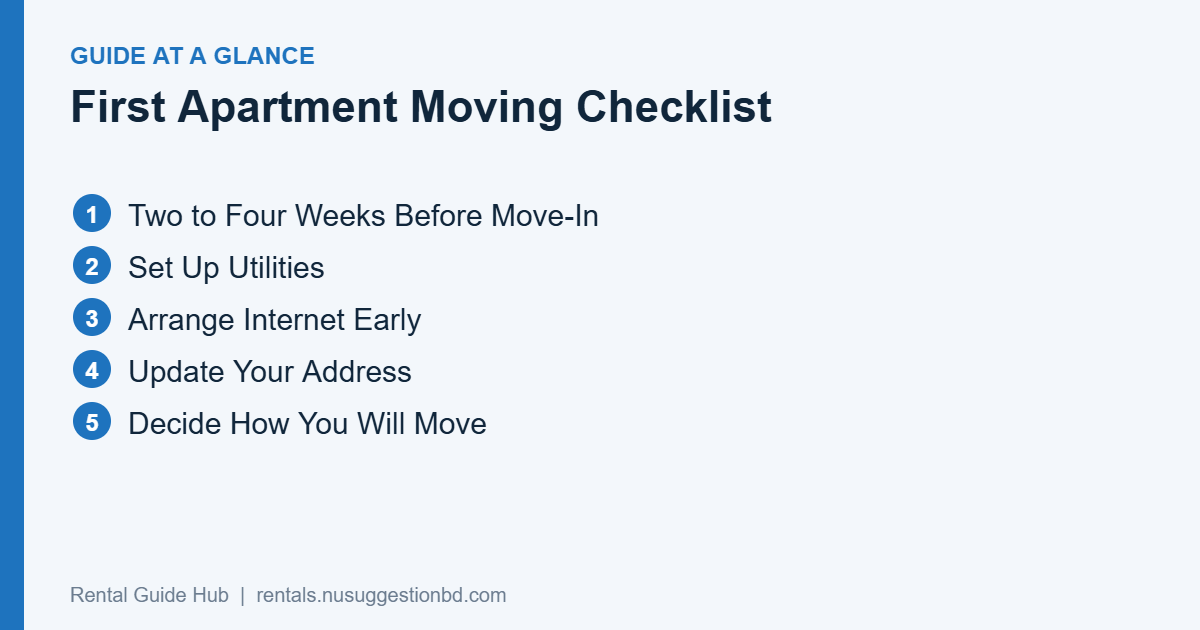
First Apartment Moving Checklist at a Glance
A first apartment moving checklist works best when you start weeks ahead and tick items off in order. Print your first apartment moving checklist and keep it with your lease.
Frequently Asked Questions About First Apartment Moving Checklist
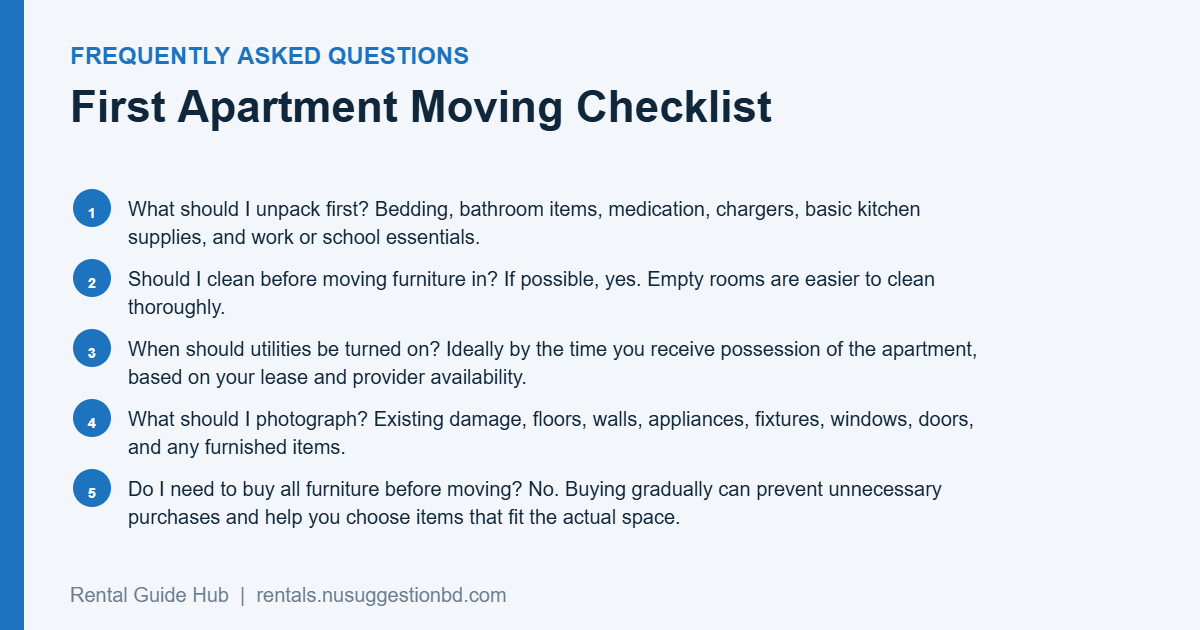
What should I unpack first?
Bedding, bathroom items, medication, chargers, basic kitchen supplies, and work or school essentials.
Should I clean before moving furniture in?
If possible, yes. Empty rooms are easier to clean thoroughly.
When should utilities be turned on?
Ideally by the time you receive possession of the apartment, based on your lease and provider availability.
What should I photograph?
Existing damage, floors, walls, appliances, fixtures, windows, doors, and any furnished items.
Do I need to buy all furniture before moving?
No. Buying gradually can prevent unnecessary purchases and help you choose items that fit the actual space.
Where should I start with first apartment moving checklist?
Start with the section on “Two to Four Weeks Before Move-In”, then move on to “Set Up Utilities” and keep short notes as you work through this first apartment moving checklist guide.
Final Verdict on First Apartment Moving Checklist
A smooth first apartment move depends more on preparation than on buying everything at once. Confirm access, organize utilities, protect your documents, inspect the unit before unpacking, and focus on essential items first. Once the apartment is functional, you can improve it gradually without unnecessary expense. Keep this first apartment moving checklist guide handy as a checklist the next time you compare options.