Hiring professional movers can turn a stressful weekend into a manageable job, but it can also become the worst part of your move if you choose the wrong company. Rogue movers advertise low prices, then raise the bill after loading, delay delivery or hold your belongings until you pay more. Knowing how to hire movers safely protects both your money and your possessions.
Use this guide to hire movers with confidence: how to check a company, compare written estimates and read the contract before you pay.

This guide explains how to verify a mover, compare estimates, read the paperwork and avoid common scams. It works well with How to Plan a Smooth Apartment Move Without Last-Minute Stress and How to Move on a Budget.
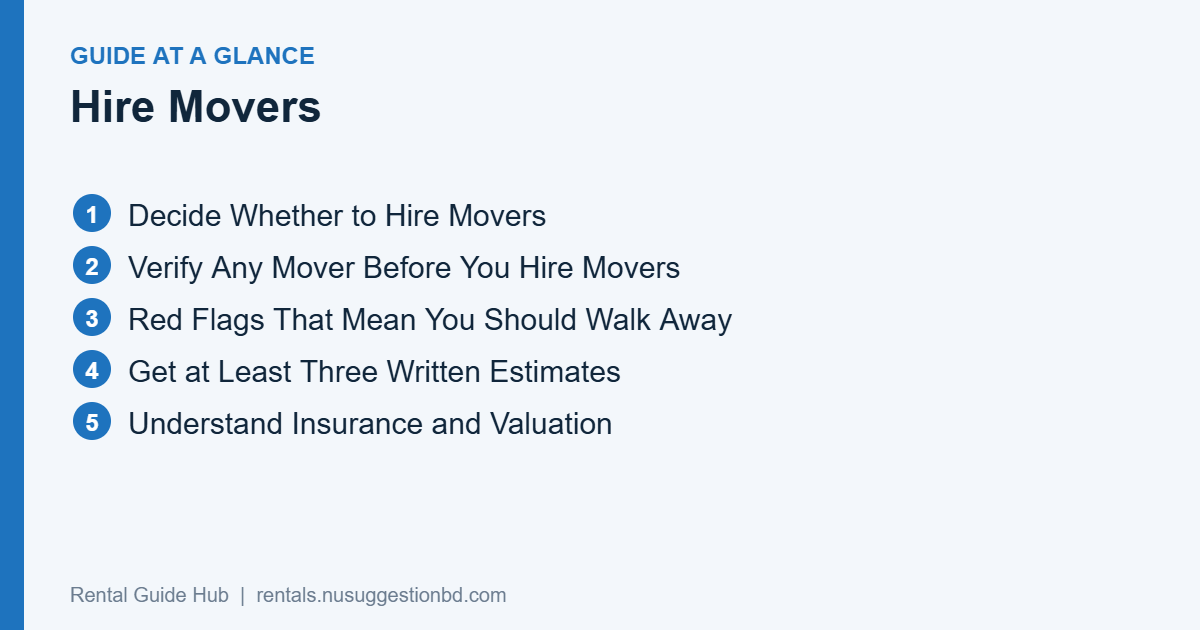
Decide Whether to Hire Movers
Full-service movers are worth considering when you have heavy furniture, a long-distance move, stairs, a tight schedule or health limits. Many renters hire movers only for the biggest items and handle the rest themselves. Get quotes for a few options, such as loading and unloading only, a truck with a driver, or a full-service move, so you can match the service to your budget.
Verify Any Mover Before You Hire Movers
- Check registration. Movers that carry household goods between states must be registered with the Federal Motor Carrier Safety Administration and have a USDOT number. Ask for the number and look the company up in the FMCSA database.
- Check the complaint history. Review the mover’s record, reviews and any complaints on file.
- For local moves, check state rules. Requirements vary, so contact your state consumer protection office or licensing agency.
- Confirm a physical address and phone number. Be cautious about companies with no real office or with trucks that carry another brand name.
- Confirm who will do the work. Ask whether the company uses its own crew or subcontractors.
Red Flags That Mean You Should Walk Away
- The company demands a large cash deposit or full payment before the move.
- The quote comes over the phone or internet without anyone assessing your belongings.
- The price is far lower than every other estimate.
- No USDOT number, license or insurance information is offered.
- The company does not give you required consumer booklets for interstate moves.
- The contract is blank or incomplete when you are asked to sign.
- The website has no address and the mover answers calls with a generic name.
- Someone threatens to keep your belongings unless you pay extra.
Get at Least Three Written Estimates
Ask three companies to estimate your move, preferably with an in-home or video survey. Give each one the same details, including the number of rooms, large items, stairs, elevators, parking distance and any fragile or high-value pieces.
Binding, Non-Binding and Not-to-Exceed Estimates
- Binding: the price is fixed based on the listed items and services.
- Non-binding: the final cost depends on actual weight or time, so it may change.
- Not-to-exceed: the final cost may be lower but cannot go above the quoted maximum.
Ask which type you are getting, and make sure it is written on the estimate.
Understand Insurance and Valuation
Basic coverage from a mover is often limited. For interstate moves, default liability may be calculated by weight, and the amount per item can be very low compared with its replacement cost. Ask about full-value protection, any deductible and what is excluded. Check whether your renters insurance covers goods in transit, and read our guide to renters insurance if you are unsure what your policy includes.
Read the Contract Before You Sign
- Names, addresses and contact numbers for both parties.
- Pickup and delivery dates, plus how delays are handled.
- The type of estimate and a clear list of services included.
- Extra charges, such as stairs, long carries, packing materials and storage.
- Payment terms and accepted payment methods.
- Insurance or valuation choices, with the amount in writing.
- A complete inventory form, with no blank lines left to fill in later.
Never sign blank documents. Keep copies of every page, and take photos of the signed pages on your phone.
Prepare for Moving Day
- Photograph valuables and furniture before they are loaded.
- Keep medication, documents, jewelry and electronics with you.
- Label boxes by room and mark fragile items.
- Check the truck and crew details against your paperwork.
- Review the inventory before you sign anything and note any damage.
- Reserve elevators and parking with your building ahead of time.
The First Apartment Moving Checklist has additional steps for setting up utilities and changing addresses.
Payment Tips
- Use a credit card or another traceable method when possible.
- Pay the amount stated in your contract, and ask for itemized receipts.
- Avoid paying large cash amounts, especially before loading.
- Do not agree to sudden new charges until you have seen written proof.
What to Do If Something Goes Wrong
- Stay calm, and document everything with photos and written notes.
- Do not sign a delivery receipt that says everything arrived undamaged if it did not.
- File a written damage claim within the time shown in your contract.
- Contact the mover’s claims department, then your credit card issuer if you paid by card.
- File complaints with the FMCSA for interstate moves and with your state attorney general or consumer protection office.
- If your belongings are being held, report it to law enforcement and consumer authorities immediately.
Questions to Ask Before You Hire Movers
A short phone call can reveal a lot about a company. When you hire movers, ask questions in plain language and listen for clear answers.
- Will someone survey my belongings before you give a final price?
- Is your company registered, and can I see your USDOT number and insurance?
- Will your own employees handle my move, or do you use subcontractors?
- What happens if the move takes longer than the estimate?
- How do you handle damage claims, and what is the deadline to file?
- Do you charge extra for stairs, long carries or heavy items?
Good companies answer directly and put details in writing. If you feel rushed or confused when you try to hire movers, pause and compare another company before you decide.
- Verify USDOT registration, complaint history and a real address before you hire movers.
- Get at least three written estimates, ideally after a survey of your belongings.
- Read the contract, understand insurance limits and never sign blank forms.
- Avoid large cash deposits and prices that are far below other quotes.
Common Hire Movers Mistakes to Avoid
- Choosing the cheapest mover without verification.
- Accepting a phone-only quote for a large move.
- Failing to inventory and photograph valuables.
- Skipping insurance questions.
- Booking at the last minute during the busy summer season.
Hire Movers at a Glance
To hire movers safely, verify the company, compare three written estimates and read every line of the contract. If a mover will not put the price in writing, do not hire movers who ask for a large cash deposit.
Frequently Asked Questions About Hire Movers
How do I check whether a moving company is legitimate?
For interstate moves, ask for the company’s USDOT number and search for it in the FMCSA database. For local moves, check your state consumer protection or licensing agency and review complaint histories.
How much deposit should I pay when I hire movers?
Be wary of large upfront payments. Reputable companies explain payment terms in writing, and many accept payment on delivery. Ask for a clear contract before paying anything.
Are online moving quotes reliable?
They can be a starting point, but they are risky without a survey of your belongings. Ask for a written estimate that lists the services and type of estimate.
What should I do if a mover raises the price after loading?
Do not agree to unexplained charges. Ask for the contract and estimate in writing, document the situation and contact consumer authorities if the mover refuses to deliver.
Where should I start with hire movers?
Start with the section on “Decide Whether to Hire Movers”, then move on to “Verify Any Mover Before You Hire Movers” and keep short notes as you work through this hire movers guide.
Final Verdict on Hire Movers
The smartest way to hire movers is to verify first, compare written estimates, read every page and keep control of your documents. A reputable mover welcomes questions and provides clear paperwork. If a company avoids details or pressures you, choose another one before your belongings are on the truck.