A strong rental application can make the difference between getting a home and losing it. A rental application gives a landlord or property manager the information needed to decide whether to offer you a lease. The exact process varies, but preparing common documents in advance can help you move quickly when you find a suitable apartment.
This guide covers the rental application: documents to gather, fees to expect and how to submit a strong application on time.

The application process also involves sensitive personal information and sometimes non-refundable fees, so do not submit documents casually. Verify the property and the person collecting your information before proceeding.
Confirm the Property Before Applying
Make sure the unit, rent, lease term, move-in date, major fees, utilities, and basic rules match what you expect.
Whenever possible, view the property or use a credible live virtual tour. Compare the address and management information independently.
Use the Apartment Hunting Checklist: What to Check Before You Apply before paying application fees.
Common Identification Documents
Applications may ask for government-issued identification such as a driver’s license, passport, or other accepted ID.
Do not send sensitive identity documents to an unverified person or through an insecure channel.
Ask how the property handles and protects application data.
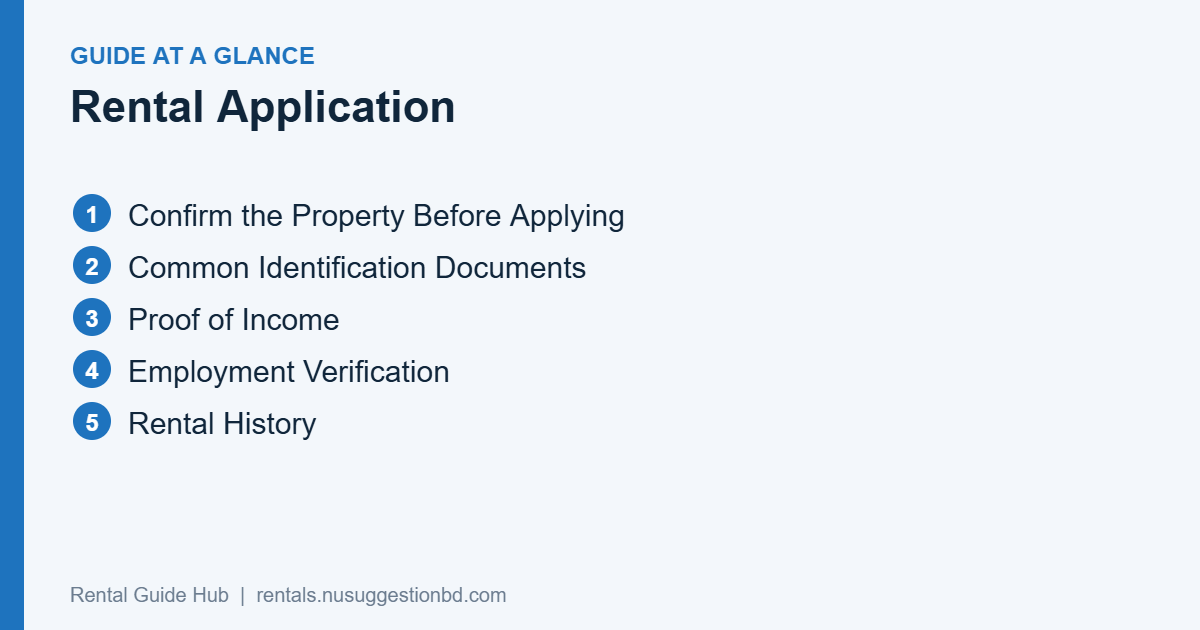
Proof of Income
Landlords often request evidence that you can pay the rent. Depending on your situation, this may include pay stubs, employment letters, tax documents, bank statements, benefit statements, offer letters, or other proof.
Requirements vary for employees, self-employed applicants, students, retirees, and people with variable income.
Employment Verification
A property may contact an employer or use third-party screening. Provide accurate contact information and understand what permission you are granting.
If you are starting a new job, an offer letter may be useful where accepted.
Rental History
Applications may ask for previous addresses, landlords, rental dates, and payment history.
Prepare accurate information so you do not need to reconstruct several years of addresses under time pressure.
References
Some landlords request personal or professional references. Choose people who can respond promptly and who understand that they may be contacted.
Do not list someone without permission.
Credit and Background Screening
Screening practices vary by location and landlord. A property may review credit, rental history, public records, or other permitted information.
Ask what screening is performed and whether the application fee covers a third-party report.
In the United States, federal fair-housing rules prohibit discrimination based on protected characteristics. Official information is available at https://www.hud.gov/fairhousing.
Application Fees
Application fees may cover screening or administrative costs and are sometimes non-refundable. Ask the amount, what it covers, and whether it is refundable under any circumstances.
Be cautious if the fee is unusually high or if someone pressures you to pay before providing basic property information.
Holding Deposits
Some properties request money to hold a unit during the application or lease-signing process. A holding deposit is different from a security deposit in many situations.
Ask what happens to the money if you are approved, denied, or decide not to sign. Get the terms in writing.
Security Deposits
Security deposits are often paid after approval or when signing the lease, depending on local practice.
Before paying, confirm the amount, payment method, recipient, and lease terms. Our Rental Application Guide: Documents, Fees, and Approval Steps covers this in more detail.
Income Requirements
Some landlords use an income multiple or other affordability standard. Even if you qualify, decide separately whether the rent fits your personal finances.
Use Rent vs. Income: How Much Rent Can You Realistically Afford? to set your own limit.
Co-Signers and Guarantors
Applicants with limited income, credit history, or rental history may be allowed to use a co-signer or guarantor.
The guarantor may need to complete a separate application and accept significant financial responsibility. Everyone involved should understand the lease terms.
Pet Information
If you have a pet, the application may request type, breed, size, vaccination records, or other information where legally permitted.
Clarify pet rent, deposits, fees, and restrictions before applying.
Vehicle and Parking Information
Properties with assigned parking may request vehicle details. Confirm whether parking is included or separately charged.
If parking is essential, do not wait until after lease signing to verify availability.
Approval Timeline
Ask how long the review normally takes and how you will be notified. Avoid making non-refundable moving commitments until you have written confirmation and understand the next steps.
Read Before You Sign
Approval is not the end of the process. Read the complete lease, including addenda and building rules.
Check rent, due date, lease term, utilities, fees, maintenance, pets, parking, guests, renewal, termination, deposit, and move-out requirements.
Keep Copies
Save the application, receipts, approval notice, lease, addenda, and important communication.
Digital copies should be stored securely because they may contain sensitive information.
Warning Signs
Be careful when a supposed landlord refuses to verify identity, will not show the property, demands immediate payment through unusual methods, provides inconsistent lease details, or uses pressure instead of normal documentation.
A legitimate application process should still allow you to understand what you are paying for.
Official Resources for Rental Application
- Consumer Financial Protection Bureau: Budgeting and money tools
- FTC: Consumer advice
- HUD: Tenant rights, laws and protections
More Guides Related to Rental Application
- How to Read an Apartment Lease Before You Sign
- How to Spot a Rental Scam Before You Send Money
- Questions to Ask Before Renting an Apartment in a New City
Rental Application at a Glance
A strong rental application is complete, accurate and on time. Gather your documents before you start the rental application so nothing delays you.
Related reading: Credit score for renting and Renting as an international student.
Frequently Asked Questions About Rental Application
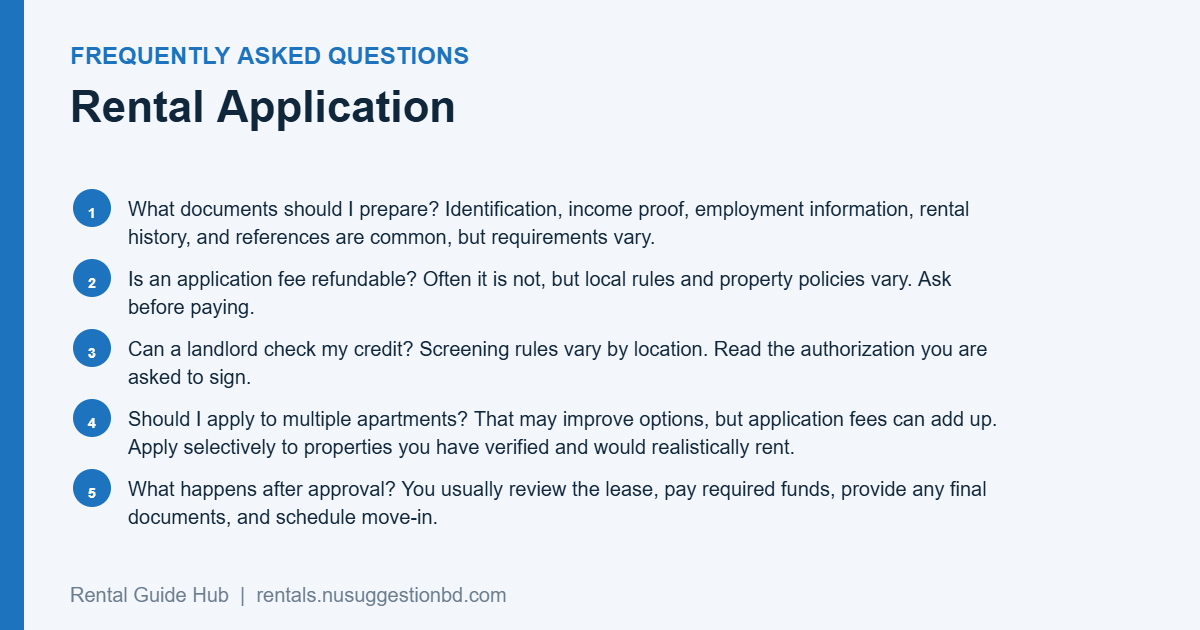
What documents should I prepare?
Identification, income proof, employment information, rental history, and references are common, but requirements vary.
Is an application fee refundable?
Often it is not, but local rules and property policies vary. Ask before paying.
Can a landlord check my credit?
Screening rules vary by location. Read the authorization you are asked to sign.
Should I apply to multiple apartments?
That may improve options, but application fees can add up. Apply selectively to properties you have verified and would realistically rent.
What happens after approval?
You usually review the lease, pay required funds, provide any final documents, and schedule move-in.
Where should I start with rental application?
Start with the section on “Confirm the Property Before Applying”, then move on to “Common Identification Documents” and keep short notes as you work through this rental application guide.
Final Verdict on Rental Application
A strong rental application begins before the form itself. Verify the property, organize your documents, understand every fee, protect sensitive information, and keep written records. Being prepared can make the process faster without forcing you to rush into a lease you have not fully reviewed. Keep this rental application guide handy as a checklist the next time you compare options.