When rent takes too large a share of your income, rent assistance can make the difference between staying housed and falling behind. The challenge is that help is spread across federal, state, local and nonprofit programs, and demand is high. Knowing where to look, what to prepare and how to avoid fake offers saves time and protects you from scams.
This guide explains rent assistance programs, where to look for help and how to avoid scams while you search.

This guide explains the main types of rent assistance, how to apply through official channels, what documents you will need and which warning signs to watch for. If you are still comparing apartments, start with How to Find Affordable Apartments Without Sacrificing Safety and Rent vs. Income: How Much Rent Can You Realistically Afford?.
Types of Rent Assistance You May Find
- Housing Choice Vouchers: the federal program often called Section 8 helps eligible low-income households pay rent in privately owned homes. A local housing agency decides eligibility and pays part of the rent directly to the landlord.
- Public housing: government-owned apartments for eligible households, also run through local housing agencies.
- Project-based and subsidized housing: privately owned properties with rent set by program rules, usually applied for at the property.
- State and local programs: short-term rent assistance, eviction prevention funds and deposit help that vary widely by area.
- Nonprofit and community help: charities and faith-based groups sometimes help with one-time rent, utilities or move-in costs.
- Utility assistance: programs that reduce energy bills can free up money for rent.
Many emergency programs created during the pandemic have ended or run out of funds, so check whether your area still accepts new rent assistance applications.
How the Housing Choice Voucher Program Works
You apply through your local public housing agency, which is overseen by the U.S. Department of Housing and Urban Development. The agency checks your income and household details. If you qualify, you may be placed on a waiting list until funding is available. Once a voucher is issued, you search for a home that accepts it, and the agency pays the difference between an approved payment standard and your share of the rent directly to the landlord.
HUD notes that high demand and long waiting lists mean you may need to apply to more than one agency. Agencies also open and close their waiting lists on a schedule, so check regularly and read each announcement carefully. After a voucher is issued, HUD guidance says you typically have at least 60 days to find a unit, so start preparing before you receive it.
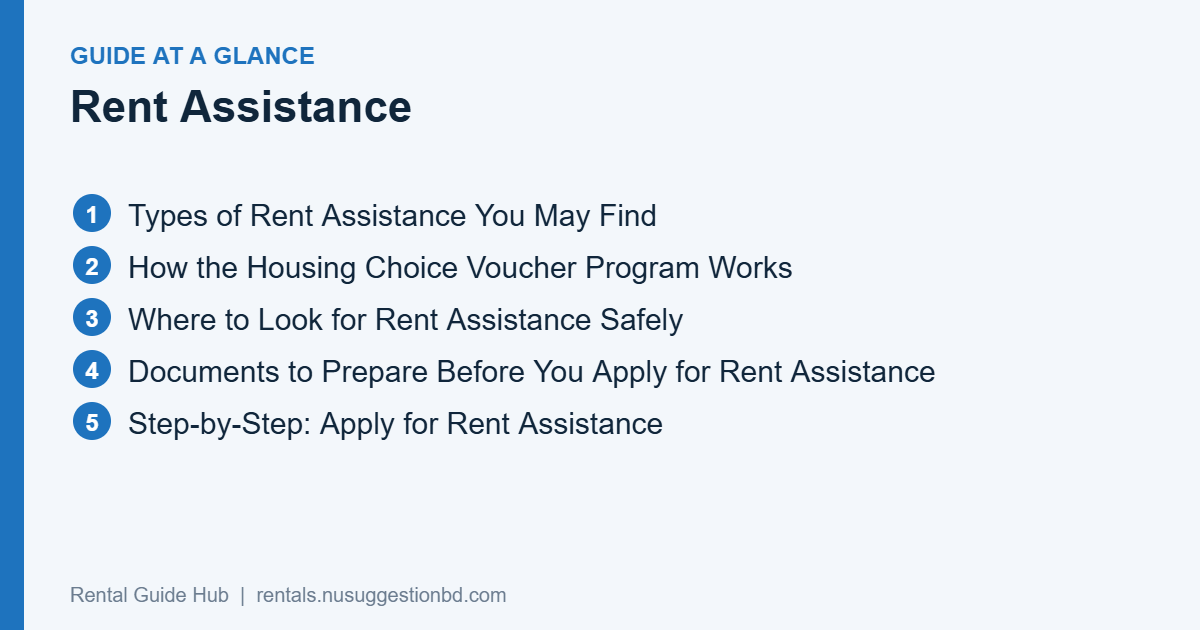
Where to Look for Rent Assistance Safely
- HUD’s Public Housing Agency directory to find and contact the agencies serving your area.
- HUD’s Resource Locator to find local help and housing counselors.
- 211, a free service that connects you with local assistance by phone or online.
- Your state or county housing department for emergency rent assistance and eviction prevention programs.
- Legal aid organizations if you have received an eviction notice or are unsure about your rights.
- Local nonprofits that provide one-time help with rent, deposits or utilities.
Use official sites that end in .gov where possible, and confirm phone numbers before you share personal details.
Documents to Prepare Before You Apply for Rent Assistance
- Photo identification for adults in your household.
- Social Security numbers or other identifying documents as required.
- Income proof, such as recent pay stubs, benefit letters or tax returns.
- Bank statements and information about other assets.
- Your lease, a notice from your landlord and recent rent ledger if you are behind.
- Household information, including children and any disability documentation if relevant.
Keep copies in one folder, and take photos of each document so you can resubmit quickly. If you are applying for a new apartment at the same time, our Rental Application Guide lists what landlords usually ask for.
Step-by-Step: Apply for Rent Assistance
- Check your income against program limits listed by the agency.
- Find open waiting lists and application windows.
- Complete the application accurately and answer every question.
- Submit by the deadline and keep a confirmation.
- Update the agency whenever your address, phone or income changes.
- Respond immediately to any request for more information.
Missed letters and out-of-date contact details are among the most common reasons people lose their place on a waiting list.
How to Reduce Housing Costs While You Wait
- Ask your landlord about a payment plan before you miss a payment.
- Look into shared housing, as explained in Roommate Apartment Checklist.
- Compare your actual bills using Apartment Utility Costs: What Renters Should Budget For.
- Ask about utility assistance, weatherization or discount programs.
- Consider a smaller or better-located home, as described in Moving Into a Smaller Apartment.
Warning Signs of Rent Assistance Scams
- Anyone who charges a fee to guarantee a voucher or a place on a waiting list.
- Websites that ask for bank login details or gift cards.
- Social media offers of free rent or grants from strangers.
- Pressure to act immediately or to keep the offer secret.
- Landlords who ask you to pay assistance money to a personal account without paperwork.
Government housing agencies and nonprofits do not sell waiting-list spots. If something feels wrong, stop and verify through an official contact. The tips in How to Spot a Rental Scam Before You Send Money also apply here.
- Rent assistance comes from federal, state, local and nonprofit sources, so check more than one.
- Vouchers are applied for through local housing agencies, and waiting lists can be long.
- Keep documents organized and contact details current.
- Never pay anyone for a guaranteed spot or approval.
Common Rent Assistance Mistakes to Avoid
- Applying to only one waiting list.
- Waiting until an eviction notice arrives before asking for help.
- Ignoring mail or emails from the housing agency.
- Providing inaccurate income or household information.
- Falling for websites that imitate government programs.
Related reading: Loan scams for renters and Personal loan for rent.
Frequently Asked Questions About Rent Assistance
How do I qualify for rent assistance?
Eligibility depends on the program, but income limits and household details are central. Local housing agencies and 211 can explain the rules for your area and which programs are open.
How long does rent assistance take?
Emergency programs may move in weeks when funds are available, while vouchers can involve long waiting lists. Apply early and keep your contact information up to date.
Can I get rent assistance if I am behind on rent?
Some state and local programs help with past-due rent or eviction prevention. Contact them as soon as you receive a notice and speak with your landlord about a plan.
Do I have to pay to apply for rent assistance?
Official housing agencies and nonprofits do not sell approval or waiting-list spots. Be cautious about any request for upfront payment and verify through an official source.
Final Verdict on Rent Assistance
Finding rent assistance takes patience, but a clear process helps. Use official directories, apply to several programs, keep your documents ready and protect yourself from anyone who promises guaranteed approval. If you need help right now, calling 211 or your local housing agency is a practical first step.