Learning to find affordable apartments starts with looking beyond the advertised rent. Finding a lower-cost apartment is not only about spotting the smallest number on a listing. A place that looks inexpensive can become costly after utilities, transportation, parking, deposits, application fees, or repairs are added. A better search focuses on total monthly value: a rent you can sustain, a location that works for your routine, a lease you understand, and a property that feels reasonably safe and well managed.
This guide shows how to find affordable apartments by looking at the true monthly cost, not just the advertised rent.

Affordable rentals are easier to find when you separate your “must-have” needs from features that are simply nice to have. Start by setting a realistic monthly housing limit, choose a manageable search area, compare several listings at the same time, and verify each property before paying or signing anything.
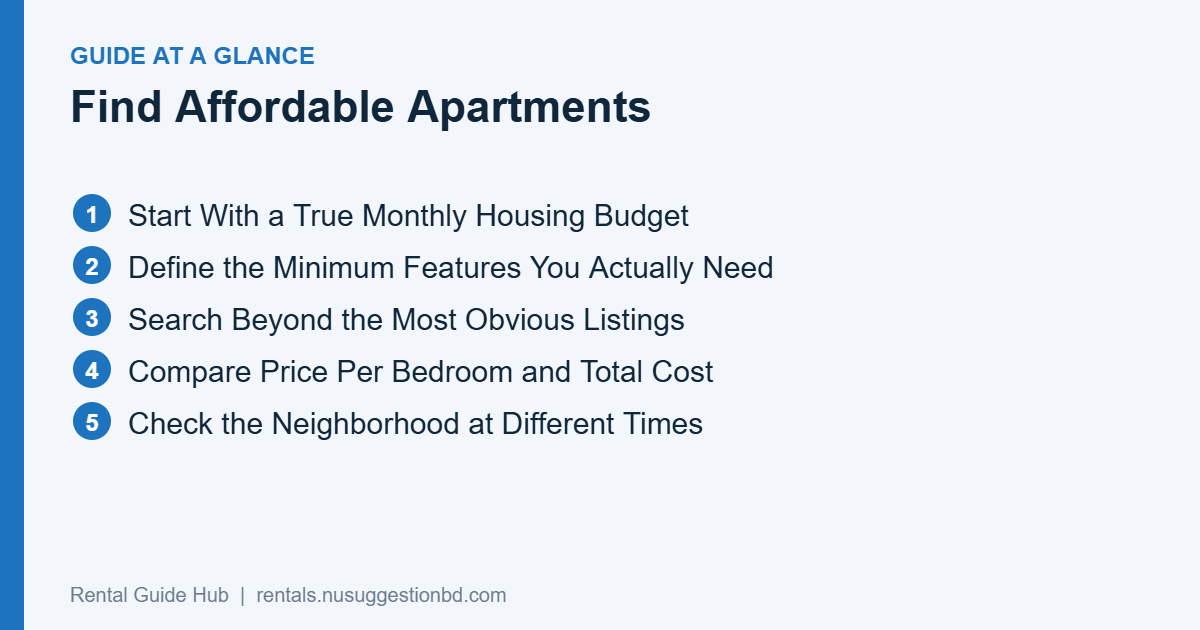
Start With a True Monthly Housing Budget
The advertised rent is only one part of the monthly cost. Before opening listing sites, write down what you can comfortably spend after essential expenses such as food, transportation, debt payments, insurance, childcare, and savings. Your housing budget should leave enough room for normal life rather than forcing you to rely on credit every month.
Include likely housing-related expenses such as electricity, water, gas, internet, parking, laundry, renter’s insurance, pet fees, and commuting. Some properties bundle certain utilities into the rent while others charge separately. A slightly higher rent may still be cheaper overall if it includes services you would otherwise pay for yourself.
If you are unsure where to begin, compare your income with the approach explained in our guide on Rent vs. Income: How Much Rent Can You Realistically Afford?.
Define the Minimum Features You Actually Need
Write two short lists before you search. The first should contain non-negotiable requirements, such as a maximum commute, number of bedrooms, accessibility needs, pet permission, or access to public transportation. The second should contain preferences such as a gym, pool, newer appliances, balcony, or premium finishes.
This prevents attractive photos from pulling you toward a property that does not fit your daily life. It also makes it easier to compromise intelligently. For example, you may decide that an older building with good transit access is a better value than a newer building that requires a car.
Search Beyond the Most Obvious Listings
Large rental platforms are useful because they let you compare many properties quickly, but they should not be your only source. Check local property-management websites, established real-estate companies, housing organizations, community boards, and reputable local groups.
Some smaller landlords advertise only through local channels. That can create legitimate opportunities, but it also means you should verify the landlord and property carefully. Never assume a listing is genuine simply because it appears on a familiar platform.
Compare Price Per Bedroom and Total Cost
A low rent can be misleading if the apartment is too small, has high utility costs, requires paid parking, or is far from work. Create a simple comparison table for your shortlist. Include rent, estimated utilities, transportation, deposits, fees, included amenities, lease length, and move-in costs.
This is particularly useful when comparing studios with one-bedroom apartments or older buildings with newer developments. The goal is not to select the cheapest line item. It is to identify the option that gives you the best usable value within your budget.
Check the Neighborhood at Different Times
A neighborhood can feel very different on a weekday morning, late afternoon, or evening. If possible, visit the area more than once. Look at lighting, pedestrian activity, traffic, public transport, nearby businesses, parking conditions, building access, and how well common areas are maintained.
You can also use public crime-data resources, local government information, transit maps, and neighborhood planning websites to understand the area. Avoid relying only on social-media comments, which may be incomplete or outdated.
Safety is personal and context-dependent, so focus on verifiable conditions and whether the location works for your routines.
Inspect the Property, Not Just the Photos
Listing photos are designed to present the property well. During a viewing, look closely at doors, windows, locks, smoke detectors, water pressure, signs of moisture, heating or cooling, appliances, electrical outlets, pests, hallway lighting, and general cleanliness.
Ask whether the exact unit you are viewing is the one you would rent. In some buildings, photos show a model unit that may have different finishes or features.
Use a consistent process every time. Our Apartment Hunting Checklist: What to Check Before You Apply can help you compare properties without forgetting important details.
Understand the Lease Before You Pay
Affordable rent is not a good deal if the lease contains costs or restrictions you did not expect. Read the full agreement and pay attention to the lease term, renewal process, late fees, utilities, maintenance responsibilities, guest rules, pet rules, parking, subletting, move-out notice, and deposit conditions.
Ask for clarification in writing when something is unclear. Verbal promises can be difficult to prove later, so important agreements should be reflected in the lease or another written document.
Laws and tenant protections vary by location. For U.S. renters, the U.S. Department of Housing and Urban Development provides official rental and housing resources at https://www.hud.gov/topics/rental_assistance.
Watch for Rental Scam Warning Signs
Scammers often use unusually low prices to create urgency. Be cautious if someone refuses to show the property, pressures you to send money immediately, asks for unusual payment methods, claims to be unavailable for every form of live communication, or cannot provide consistent details about the property.
Search the address independently and compare photos, contact information, and listed prices. If the same property appears with different owners or dramatically different rents, investigate before proceeding.
Do not send sensitive documents until you have reasonable confidence that you are dealing with the actual landlord, management company, or authorized agent.
Ask About Total Move-In Costs
The first month can cost much more than the advertised rent. You may need the first month’s rent, security deposit, application fee, utility deposits, parking fees, pet deposits, moving expenses, and basic household items.
Ask for a written breakdown before applying. This helps you avoid committing to a rental that fits your monthly budget but not your immediate cash position.
Our Rental Application Guide: Documents, Fees, and Approval Steps explains what to prepare before submitting applications.
Consider Timing and Flexibility
Rental markets change throughout the year. In some cities, competition is higher during major moving seasons. If you have flexibility, expanding your move-in date by a few weeks can create more options.
You can also widen your search radius slightly, consider older buildings, or compare nearby neighborhoods with similar transportation access. Small changes can sometimes reduce rent significantly without reducing your quality of life.
Negotiate Only When the Situation Supports It
Not every landlord negotiates, especially in competitive markets. But there may be room to discuss rent, parking, minor upgrades, move-in dates, or lease length when a unit has been vacant for a while or when you have strong application credentials.
Keep the conversation professional. Rather than demanding a discount, ask whether there is any flexibility based on your move-in date or lease term.
Official Resources for Find Affordable Apartments
- FTC: How to avoid rental listing scams
- HUD: Tenant rights, laws and protections
- 211: Find local housing help
More Guides Related to Find Affordable Apartments
- Rent vs. Income: How Much Rent Can You Realistically Afford?
- Apartment Hunting Checklist: What to Check Before You Apply
- How to Spot a Rental Scam Before You Send Money
Find Affordable Apartments at a Glance
To find affordable apartments, compare the true monthly cost, inspect in person and avoid risky deals. Anyone trying to find affordable apartments should also verify every listing.
Frequently Asked Questions About Find Affordable Apartments
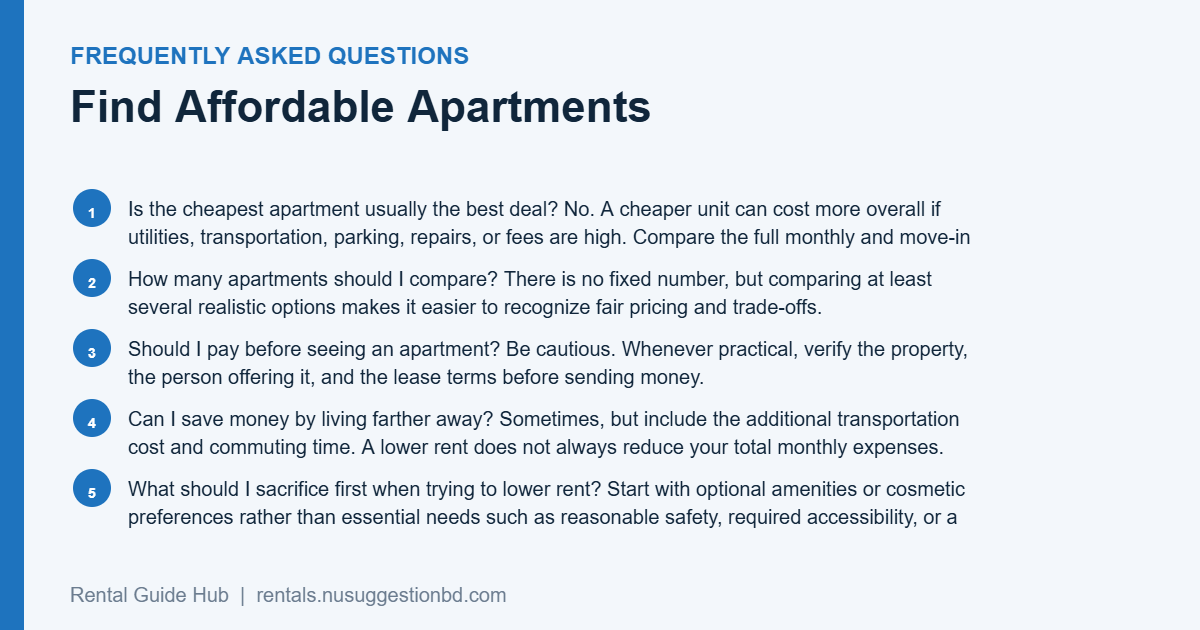
Is the cheapest apartment usually the best deal?
No. A cheaper unit can cost more overall if utilities, transportation, parking, repairs, or fees are high. Compare the full monthly and move-in cost.
How many apartments should I compare?
There is no fixed number, but comparing at least several realistic options makes it easier to recognize fair pricing and trade-offs.
Should I pay before seeing an apartment?
Be cautious. Whenever practical, verify the property, the person offering it, and the lease terms before sending money.
Can I save money by living farther away?
Sometimes, but include the additional transportation cost and commuting time. A lower rent does not always reduce your total monthly expenses.
What should I sacrifice first when trying to lower rent?
Start with optional amenities or cosmetic preferences rather than essential needs such as reasonable safety, required accessibility, or a workable commute.
Where should I start with find affordable apartments?
Start with the section on “Start With a True Monthly Housing Budget”, then move on to “Define the Minimum Features You Actually Need” and keep short notes as you work through this find affordable apartments guide.
Do the steps to find affordable apartments change by city?
The basics stay the same, but fees, rules and rent levels vary by location, so confirm local details before you commit. Anyone who wants to find affordable apartments in a new city should compare at least three homes using the same checklist.
Final Verdict on Find Affordable Apartments
The best affordable apartment is the one you can sustain comfortably while still meeting your essential needs. Compare total cost rather than headline rent, inspect the property carefully, verify the landlord, and understand every major lease condition before paying. A disciplined search may take longer, but it reduces the chance of turning a cheap rental into an expensive mistake. Keep this find affordable apartments guide handy as a checklist the next time you compare options.