Rent is only part of what an apartment costs. Electricity, heating, water, internet and other monthly bills can change how affordable a home really is, and they are easy to overlook when you compare listings. Learning how to estimate apartment utility costs before you sign helps you avoid a budget shock in your first winter or summer.
This guide shows how to estimate apartment utility costs before you sign, so your first winter bill is not a surprise.

This guide shows which utilities to ask about, how to estimate each one, what set-up costs to expect and how to keep bills lower. It pairs well with our guides on how much rent you can afford and reading a lease before you sign.
Find Out Which Utilities Are Included
Start with the listing and the lease. In some buildings, rent includes water, sewer and trash; in others, you pay everything. Ask which services are included and which you must set up yourself. Also ask how heating and hot water work. Electric heating, natural gas and shared building systems all produce very different bills. In multi-unit buildings, ask whether utilities are individually metered or billed to tenants using a formula, sometimes called ratio utility billing, and request an explanation of how the formula works.
Common Utility and Household Bills
- Electricity: lighting, appliances and often heating and cooling.
- Natural gas or heating fuel: heating, hot water and cooking in many homes.
- Water and sewer: often billed monthly or quarterly, sometimes included in rent.
- Trash and recycling: sometimes a flat fee charged by the building.
- Internet: one of the largest bills for many renters; plans and providers vary by address.
- Phone and streaming: not utilities, but part of your monthly budget.
- Renters insurance, parking and pet fees: recurring costs that belong in the same calculation. See our renters insurance guide.
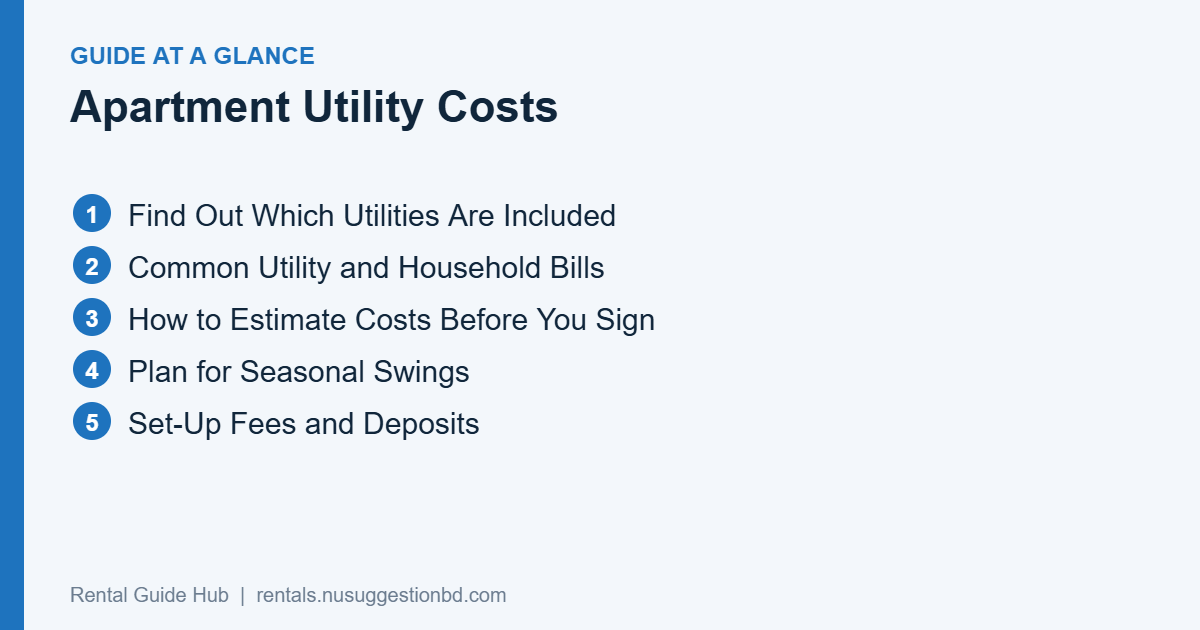
How to Estimate Costs Before You Sign
You cannot know your exact bills in advance, but you can get a realistic range.
- Ask the property manager for the typical monthly range for a unit of the same size, and ask whether it varies by season.
- Ask current tenants if you meet them during a tour. Their honest answer is often the most useful.
- Contact the providers. Utility companies can usually tell you who serves the address and what service plans exist. Some can share typical usage for the address.
- Consider the unit. Size, floor, sun exposure, window quality, insulation and appliance age all influence bills.
- Consider your habits. Working from home, long showers and many devices raise usage.
Plan for Seasonal Swings
Heating and cooling can make bills in the coldest or hottest months much higher than the rest of the year. When you build a budget, plan for the most expensive month rather than the average. Many utilities offer a budget billing or levelled billing option that spreads annual costs into similar monthly payments. This does not reduce the total, but it makes monthly planning easier.
Set-Up Fees and Deposits
New accounts may involve activation fees or deposits, although a good payment history can sometimes reduce or remove deposits. Internet providers may charge installation or equipment fees. Ask about all of these when you compare apartments and add them to your move-in budget. Schedule service to start on the day your lease begins so you do not pay for an empty home or arrive without power. Our guide to planning a smooth move includes a timeline for transferring services.
Practical Ways to Lower Your Bills
- Adjust the thermostat a few degrees and use a programmable or smart thermostat if the lease allows.
- Use LED bulbs and turn off lights and idle electronics.
- Close curtains against summer sun and open them for winter warmth.
- Ask permission before adding weatherstripping or draft stoppers, and report leaks and drafts to the landlord.
- Run dishwashers and washing machines only with full loads.
- Fix or report dripping taps and running toilets, which waste water.
- Review your internet speed and compare plans; you may not need the fastest tier.
Splitting Bills With Roommates
Decide who will hold each account and how costs will be split before you move in. Equal splits are simple; usage-based splits can feel fairer when habits differ. Put the agreement in writing, set a due date, and consider automatic payments so no one is chasing money. See our roommate apartment checklist for more.
If Bills Become Hard to Pay
Contact the utility early and ask about payment plans. Programs such as the federal Low Income Home Energy Assistance Program (LIHEAP) help eligible households with energy costs, and the service 211 can connect you with local help. Our guide to rent assistance and housing help lists more options.
Compare Apartments by Total Monthly Cost
Do not compare rent alone. Add rent, utilities, internet, parking, pet fees, renters insurance and commuting costs for each apartment. For example, a home with rent that includes water and trash may cost less overall than a cheaper-looking home where you pay those bills yourself. The right comparison is the total, not the headline rent.
Apartment Utility Costs Quick Checklist
- Which utilities are included in rent?
- What heating and hot water systems does the unit use?
- What is the typical monthly range in summer and winter?
- Are there set-up fees, deposits or equipment charges?
- Who is on each account and how will costs be split?
Common Apartment Utility Costs Mistakes to Avoid
- Comparing only rent. Utilities can erase the savings from a cheaper listing.
- Budgeting for the average month. Peak months are what strain your finances.
- Forgetting set-up costs. Deposits and installation fees add to your move-in total.
- Starting service late. Arranging it ahead avoids gaps and delays.
- Splitting bills informally. Without a written plan, small disagreements become big ones.
Official Resources for Apartment Utility Costs
- 211: Find local help with utilities and housing
- Consumer Financial Protection Bureau: Budgeting and money tools
- HUD: Tenant rights, laws and protections
Apartment Utility Costs at a Glance
Apartment utility costs vary by home, season and habits, so plan for your most expensive month. Add apartment utility costs to the rent whenever you compare apartments.
Frequently Asked Questions About Apartment Utility Costs
Which utilities are usually the renter’s responsibility?
Electricity and internet are commonly the tenant’s responsibility. Gas, water, sewer and trash vary by building. The lease and listing should say which you pay, so confirm before you sign.
How much should I budget for utilities?
It depends on the size of the home, climate, heating system and your habits, so there is no single figure. Ask the manager and current tenants for a range, then plan for your most expensive month.
Can the landlord charge me for water without a meter?
Some buildings bill tenants using a formula based on unit size or occupancy. The method should be explained in the lease. If it is unclear, ask for a written explanation and confirm what local rules allow.
What is budget billing?
It is an option offered by many utilities that averages your expected annual cost into similar monthly payments. It smooths seasonal spikes but is usually adjusted if your actual usage differs.
Where should I start with apartment utility costs?
Start with the section on “Find Out Which Utilities Are Included”, then move on to “Common Utility and Household Bills” and keep short notes as you work through this apartment utility costs guide.
Final Verdict on Apartment Utility Costs
An apartment is only affordable if its total monthly cost fits your budget. Ask what is included, estimate each bill, plan for seasonal peaks and count set-up costs. A few questions before you sign can prevent months of financial stress. Keep this apartment utility costs guide handy as a checklist the next time you compare options.