An empty apartment is exciting for about an hour, then you realize you need a bed, a sofa, a table and a place to store everything. For many renters, furniture rental sounds like the easy answer, because it avoids a big upfront bill and a truck full of heavy items. Buying can still be cheaper over time, especially if you plan to stay. The right choice comes down to how long you will live there and how much flexibility you need.
This guide compares furniture rental with buying so you can see which option costs less for your lease length and lifestyle.

This guide compares furniture rental and buying, shows how to calculate the true cost, and lists the contract details to check before you sign. Pair it with Furnished vs Unfurnished Apartments: Which Is Better? and First Apartment Moving Checklist if you are setting up a new home.
How Furniture Rental Works
With furniture rental, you pay a monthly fee to use items such as a bed, sofa, dining set or desk. Providers usually offer packages, set a minimum term, deliver and assemble the pieces, and collect them when the term ends. Some plans let you buy items at the end or swap pieces during the term, while others do not.
It is important to separate furniture rental from rent-to-own. Rent-to-own plans are designed to transfer ownership after many payments, and the total can be far higher than the retail price. Read the terms closely and compare the total payable amount with the price of buying outright.
When Furniture Rental Makes Sense
- Short stays: a few months of work, study or relocation.
- Uncertain plans: you are not sure which city or home you will live in next year.
- Limited cash: you want to protect savings for rent, deposits and moving costs.
- No storage or transport: you cannot move or store heavy furniture.
- Temporary staging: you need a table and chairs for a short period.
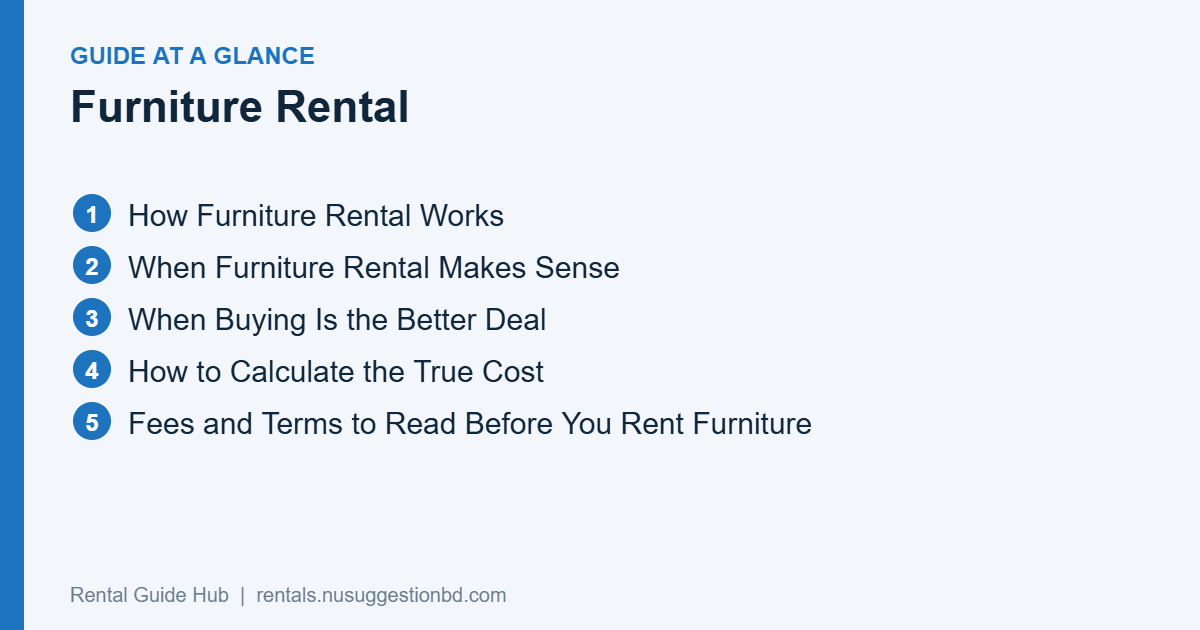
When Buying Is the Better Deal
- You expect to stay at least 12 to 18 months.
- You can find quality secondhand pieces at low prices.
- You want specific sizes or styles that rental catalogs do not offer.
- You value ownership and the resale option.
- You are buying durable basics, such as a bed frame, dining table or bookshelf, that will move with you.
How to Calculate the True Cost
Create a simple side-by-side table for the time you expect to need the furniture.
- List what you need. Include essentials only at first, such as a bed, a seating option, a table and storage.
- Price the monthly furniture rental plan. Add delivery, assembly, removal and any damage-waiver fees.
- Multiply by your expected months. Include renewal increases, if any.
- Price buying new and secondhand. Add delivery, assembly tools and disposal costs.
- Subtract resale value. Quality items can often be sold if you move.
- Compare totals and add a safety margin.
Example only: if a package costs $120 per month and you need it for six months, the total is $720 plus fees. Buying a basic secondhand set for $600 and selling it for $300 later brings the net cost to $300. Replace these numbers with real quotes, because prices vary by area and item.
Fees and Terms to Read Before You Rent Furniture
- Minimum term and what happens if you leave early.
- Delivery, assembly, pickup and rescheduling charges.
- Damage, cleaning and wear policies, including how stains and scratches are judged.
- Late fees, auto-renewals and price changes.
- Buy-out or purchase options and how they are priced.
- Security deposits and how they are returned. The principles in How to Read an Apartment Lease Before You Sign apply to any contract.
- Whether your renters insurance covers rented items.
Building Rules and Logistics
Check whether your building requires elevator reservations, delivery windows or a certificate of insurance from the delivery company. Measure doorways, stairwells and elevators before you order. For small spaces, review Moving Into a Smaller Apartment: How to Downsize Smartly so you choose the right sizes.
Smart Ways to Furnish on a Budget
- Buy essentials first, such as a bed, a place to sit and a place to eat. Add the rest later.
- Check local community groups, thrift stores and marketplace listings, and inspect items in person.
- Look for solid wood or sturdy frames, and check mattresses, upholstery and drawers carefully.
- Use multi-purpose pieces, such as storage ottomans and fold-down tables.
- Ask friends and family whether they have items to lend.
- Follow the ideas in How to Move on a Budget to avoid spending twice.
A Hybrid Approach That Often Works Best
You do not have to choose all or nothing. Many renters buy durable items such as a bed frame, a dining table and bookshelves, then use furniture rental for pieces they may change, like a large sofa or a work desk. This balances cost and flexibility, and it reduces what you need to move later.
Watch for Scams and Overly Aggressive Deals
- Verify the company, address and reviews before paying a deposit.
- Avoid sellers who insist on payment outside normal channels.
- Beware of prices that seem too low for new items.
- Read every page before you sign, and keep a copy.
- Furniture rental works best for short stays, uncertain plans and limited cash.
- Buying usually wins when you stay a year or longer.
- Compare total cost, including fees and resale value.
- Read the contract for minimum terms, damage rules and renewals.
Common Furniture Rental Mistakes to Avoid
- Renting for much longer than you planned.
- Ignoring delivery and removal fees.
- Confusing furniture rental with rent-to-own contracts.
- Buying oversize furniture that does not fit through the door.
- Forgetting to photograph items on delivery.
Furniture Rental at a Glance
Furniture rental suits short stays and changing needs, while buying wins when you will keep the pieces for years. Compare the full furniture rental cost over your lease length before you decide.
Frequently Asked Questions About Furniture Rental
Is furniture rental cheaper than buying?
For short stays, it often is, because you avoid a large upfront cost and moving expenses. For stays of a year or more, buying new or secondhand is usually cheaper overall.
What happens if I damage rented furniture?
Providers usually charge for damage beyond normal wear based on their policy. Read the damage terms, take photos on delivery and ask whether a damage waiver is available.
Can I buy the furniture I rent?
Some providers offer buy-out options, but pricing varies. Compare the buy-out price with the cost of buying new or secondhand before you agree.
Does renters insurance cover rented furniture?
Sometimes. Ask your insurer whether rented items are covered and whether the provider requires its own protection plan.
Where should I start with furniture rental?
Start with the section on “How Furniture Rental Works”, then move on to “When Furniture Rental Makes Sense” and keep short notes as you work through this furniture rental guide.
Final Verdict on Furniture Rental
Furniture rental can be a smart tool when your stay is short or your plans are uncertain, and buying wins when you will stay longer. Calculate the real cost, read the contract and consider a hybrid plan. Photograph everything on delivery, and keep copies of all paperwork.