Many renters assume the listed price is final, but plenty of landlords will negotiate rent when the request is reasonable, polite and backed by facts. A small monthly reduction, a waived fee or a free month can add up to hundreds of dollars over a lease. You will not win every time, yet the cost of asking is usually zero.
This guide explains when and how to negotiate rent, what to ask for besides a lower price and how to get any deal in writing.

This guide shows when it makes sense to negotiate rent, how to prepare your case, what to ask for besides a lower price, and how to put the final deal in writing. If you are still setting a budget, read Rent vs. Income: How Much Rent Can You Realistically Afford? and How to Find Affordable Apartments Without Sacrificing Safety first.
When You Can Negotiate Rent Successfully
Landlords are more flexible when they want to avoid an empty unit. Look for these situations before you start the conversation.
- High vacancy: a building with several listings, long days on market or visible concessions is more open to a deal.
- Slow seasons: late autumn and winter often bring fewer applicants than summer, so landlords prefer a reliable tenant.
- Lease renewal: keeping a good tenant is cheaper than finding a new one, so you can negotiate rent at renewal with real leverage.
- Independent landlords: small owners can often decide quickly, while large property managers may follow fixed pricing software.
- Longer terms: offering a 12 to 18 month lease can justify a lower monthly price.
In very tight markets or at buildings with long waitlists, a price cut is less likely, though asking for a waived fee or flexible move-in date may still work.
Do Your Homework Before You Negotiate Rent
Strong requests are specific. Gather evidence before you speak with the landlord.
- Collect comparable listings. Find three to five similar units nearby with the same size, condition and amenities. Our guide to how to compare apartment buildings in the same neighborhood shows what to check.
- Check days on market. A unit that has been listed for weeks has less pricing power.
- List the unit’s weak points. Noise, dated appliances, no parking or a long walk to transit all support a lower price.
- Know your walk-away number. Decide the highest rent that still fits your budget before you talk.
- Prepare your paperwork. Proof of income, references and a clean rental history make you a low-risk applicant.
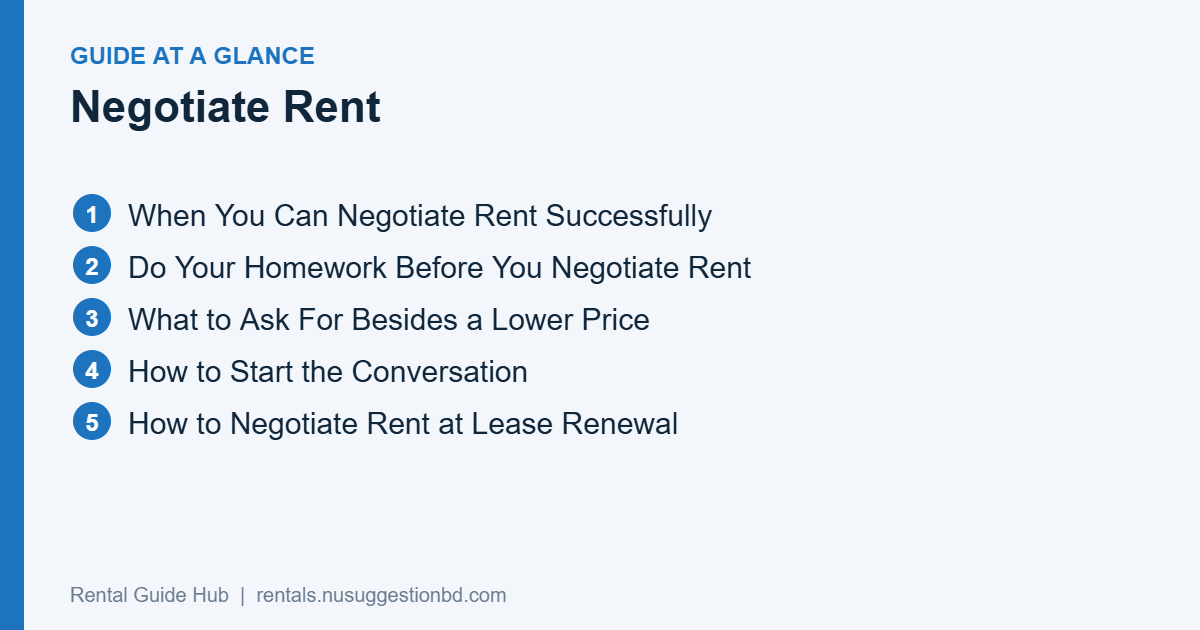
What to Ask For Besides a Lower Price
If the landlord will not move on the headline number, other concessions can have the same financial effect.
- One month of free or half-price rent on a longer lease.
- Waived application, administration or pet fees.
- Included parking, storage or a reduced parking charge.
- Utilities or internet included for a set period.
- A smaller security deposit or a payment plan for move-in costs.
- A repair or upgrade, such as new paint, a deep clean or a replaced appliance.
- A flexible lease length that matches your plans.
Before you accept any package, compare the total cost over the lease, including utilities and monthly services, not only the monthly rent.
How to Start the Conversation
Be friendly, brief and specific. Say that you like the apartment and want to sign, then explain what would help you commit. Avoid ultimatums, comparisons that sound insulting and long complaints.
Sample Message
Hello, I enjoyed touring the apartment and I am ready to apply this week. Similar one-bedroom units nearby are listed between $1,450 and $1,500 per month, and this unit is priced at $1,575. Would you consider $1,500 per month on a 12-month lease? I can provide proof of income and references, and I am flexible on move-in date.
The numbers above are only an example. Replace them with the real comparisons you found, and keep your tone appreciative.
How to Negotiate Rent at Lease Renewal
Renewal is often the easiest time to negotiate rent, because a landlord already knows you pay on time and take care of the home. When you receive a rent increase notice, respond quickly and calmly.
- Thank the landlord and ask how the new amount was set.
- Share comparable listings that are priced lower.
- Offer a longer renewal term in exchange for a smaller increase.
- Mention any maintenance issues that were never fixed.
- Ask whether a smaller increase or a one-time credit is possible.
Read the renewal terms carefully using How to Read an Apartment Lease Before You Sign, and check local rules about notice periods and rent increases.
Handling a Counteroffer
A landlord may come back with a smaller discount, a different concession or a firm no. Treat a counteroffer as progress. Compare the full cost, ask for the offer in writing and take a day to decide if you need to. If the answer is no, you can still ask for a minor perk, such as a waived fee, or decide to keep looking.
Put the Agreement in Writing
A verbal promise is not enough. Ask for a lease addendum or an updated lease that lists the monthly amount, any concession, the start date and any promised repairs. Do not pay a deposit or sign until the written terms match what you agreed. Be careful with listings that seem far below market or that push you to pay before a viewing, since those are common warning signs described in How to Spot a Rental Scam Before You Send Money.
When to Walk Away
- The landlord refuses to put promises in writing.
- The total monthly cost, with fees, no longer fits your budget.
- The unit has problems that the landlord will not address.
- You feel pressured to decide on the spot.
- Preparation beats pressure, so bring comparable listings and clean paperwork.
- Timing matters, with winter and renewals offering the best leverage.
- If the landlord will not lower the price, ask for fees, parking or a free month.
- Always get the final deal in writing before you pay.
Common Negotiate Rent Mistakes to Avoid
- Making a lowball offer without evidence.
- Waiting until the last minute before the lease expires.
- Focusing only on rent and ignoring fees and utilities.
- Threatening to leave when you do not plan to.
- Accepting a verbal promise instead of a written addendum.
Negotiate Rent at a Glance
You can negotiate rent when you have done your research, can offer something in return and ask politely. Whenever you negotiate rent, get the agreed change added to the lease in writing.
Frequently Asked Questions About Negotiate Rent
Is it rude to negotiate rent?
No. Most landlords expect questions about price, especially when a unit has been listed for a while. A courteous, specific request is business as usual.
How much can I realistically save when I negotiate rent?
It depends on the market, the landlord and the unit. Savings may be a small monthly reduction, a waived fee or a free month, so aim for realistic outcomes rather than a large cut.
Can I negotiate rent with a large property management company?
Sometimes, although pricing is often set by software. You may have better luck asking for concessions, a waived fee or a different lease term than for a lower base rent.
What if the landlord says no?
Ask whether any concession is possible, thank them for their time and decide if the apartment still fits your budget. You can always keep searching or revisit the offer later.
Where should I start with negotiate rent?
Start with the section on “When You Can Negotiate Rent Successfully”, then move on to “Do Your Homework Before You Negotiate Rent” and keep short notes as you work through this negotiate rent guide.
Final Verdict on Negotiate Rent
The best way to negotiate rent is to be prepared, polite and flexible. Gather real comparisons, ask for something specific and get every promise in writing. Even when the monthly price stays the same, a waived fee or concession can still make the deal better for your budget.