A good apartment hunting checklist keeps you focused on facts instead of photos. Apartment hunting can become confusing when several properties look similar online. A checklist turns the process into a consistent comparison. Instead of remembering impressions after multiple viewings, you can record the same information for every unit and make a calmer decision.
Use this apartment hunting checklist to inspect homes consistently and compare them fairly before you apply.

The goal is not to find a perfect apartment. It is to verify that the property fits your budget, location needs, daily routines, and lease expectations before you pay an application fee or deposit.
Before the Viewing
Save the listing, advertised rent, address, contact information, and major features. Confirm the appointment directly with the property manager or landlord.
Check the property’s location, estimated commute, nearby transportation, grocery access, parking, and other services important to you. If the listing price seems dramatically lower than comparable properties, investigate carefully.
You can use our guide on How to Find Affordable Apartments Without Sacrificing Safety to build a realistic shortlist.
Confirm the Exact Unit
Ask whether you are viewing the actual unit that would be included in your lease. Model apartments may have newer finishes, different layouts, better views, or upgraded appliances.
If the exact unit is not available to view, ask for its unit number, floor plan, photos, expected condition, and any differences from the model.
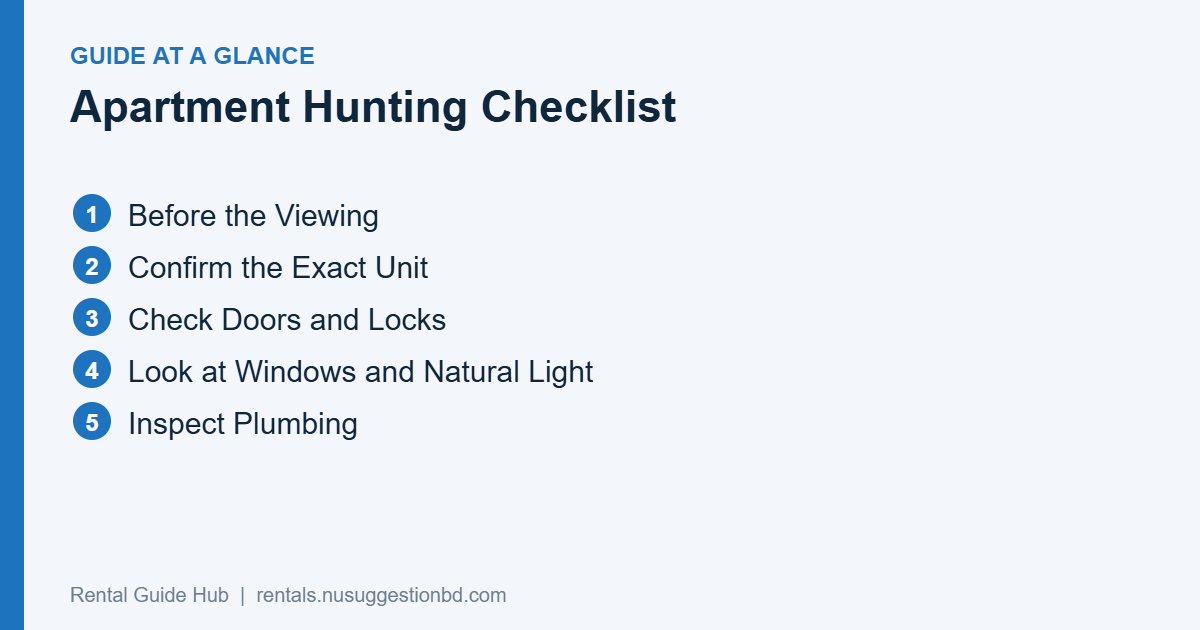
Check Doors and Locks
Look at the main entrance, unit door, balcony door, and accessible windows. They should open and close properly and feel secure.
Ask how keys, access cards, intercoms, or building entry systems work. If multiple people have previously occupied the property, ask about the policy for replacing or rekeying locks between tenants.
Look at Windows and Natural Light
Open and close windows when permitted. Check for damaged frames, broken screens, moisture, drafts, or signs of leakage.
Natural light can change how a unit feels and may also affect heating or cooling. Consider whether the amount of light is suitable for your daily routine.
Inspect Plumbing
Turn on faucets, check water pressure, and look under sinks for visible leaks or moisture. Flush toilets if appropriate during the viewing.
Look around tubs and showers for damaged seals, discoloration, soft surfaces, or persistent odors that could suggest moisture problems.
Test Major Appliances
If appliances are included, check their condition. Ask whether the refrigerator, stove, dishwasher, washer, dryer, air conditioner, heater, or other equipment is maintained by the landlord.
You may not be able to fully test every appliance during a short viewing, but visible condition can tell you whether maintenance appears consistent.
Check Heating and Cooling
Ask what type of heating and cooling the unit uses and who pays the related energy cost. In regions with extreme weather, this can materially affect monthly expenses.
If the system is controlled by the building rather than the individual unit, ask how temperature settings work and whether there are seasonal operating dates.
Look for Signs of Pests
Check corners, cabinets, baseboards, and areas under sinks. You are not conducting a professional inspection, but obvious signs of pests or poor sanitation deserve attention.
Ask how pest complaints are handled and whether regular pest-control service is provided.
Listen to Noise
Pause during the viewing and listen. Notice traffic, nearby businesses, elevators, shared hallways, neighbors, construction, aircraft, or trains.
Ask about quiet hours where applicable, but also visit the neighborhood at another time if noise is a major concern.
Review Storage
Open closets and consider where everyday items would go. A unit can appear spacious when empty but become difficult to use if storage is limited.
If there is external storage, ask whether it is included in the rent, secured, and assigned to your unit.
Check Mobile and Internet Options
Mobile signal and internet availability matter for many renters, especially remote workers and students. Test your phone signal and ask which internet providers serve the building.
Do not assume that every provider shown for the neighborhood is available to the exact address.
Understand Parking
If you have a vehicle, ask whether parking is assigned, covered, gated, street-based, or paid separately. Clarify guest parking and towing rules.
Parking fees can change the true monthly cost of a seemingly affordable unit.
Review Utilities and Fees
Ask which utilities are included and how others are billed. Also ask about trash, building amenities, package services, parking, pets, storage, and recurring administrative fees.
Request a written list of move-in costs before applying.
Check Building Common Areas
Hallways, stairs, elevators, mailboxes, trash areas, laundry rooms, entrances, and shared amenities reveal how the property is maintained.
A well-presented model unit does not compensate for neglected common spaces.
Ask About Maintenance
Find out how tenants submit maintenance requests, typical response procedures, and emergency contact options.
You do not need promises about exact response times if the property cannot guarantee them, but you should understand the process.
Evaluate the Location
Consider your actual routine rather than simply asking whether the neighborhood is “good.” Look at transportation, grocery access, healthcare, work or school travel, lighting, and services.
If you are moving to an unfamiliar area, read Questions to Ask Before Renting an Apartment in a New City before making a final decision.
Read Application Terms Before Paying
Application fees may be non-refundable, and screening criteria may vary. Ask what documents are required, whether there are income standards, how long the process usually takes, and whether deposits are refundable if the application is not approved.
Our Rental Application Guide: Documents, Fees, and Approval Steps explains how to prepare.
For U.S. renters, federal fair-housing information is available from HUD at https://www.hud.gov/fairhousing.
Compare Notes Immediately After the Viewing
Write down your impressions while they are fresh. Record the true estimated monthly cost, move-in cost, key advantages, major concerns, and unanswered questions.
A simple scorecard can help, but do not let an average score hide a serious problem such as unaffordable cost or an unacceptable commute.
Official Resources for Apartment Hunting Checklist
- HUD: Tenant rights, laws and protections
- FTC: How to avoid rental listing scams
- U.S. Fire Administration: Home fire safety
More Guides Related to Apartment Hunting Checklist
- Questions to Ask Before Renting an Apartment in a New City
- How to Find Affordable Apartments Without Sacrificing Safety
- How to Read an Apartment Lease Before You Sign
Apartment Hunting Checklist at a Glance
An apartment hunting checklist turns a tour into a fair comparison. Use the same apartment hunting checklist for every home you visit.
Frequently Asked Questions About Apartment Hunting Checklist
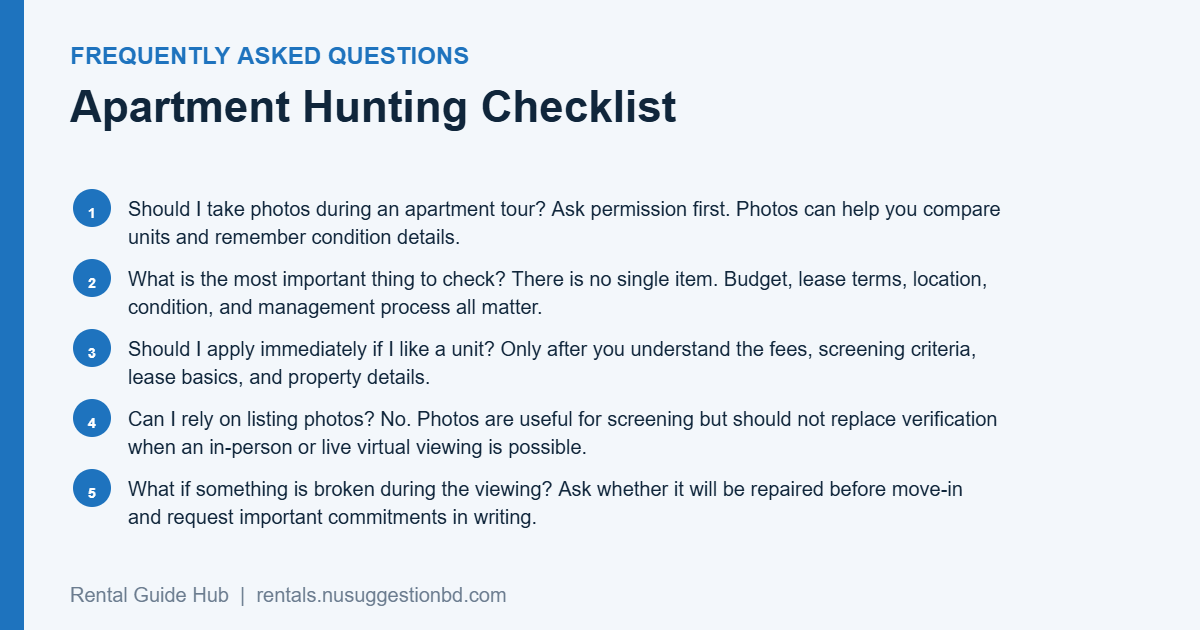
Should I take photos during an apartment tour?
Ask permission first. Photos can help you compare units and remember condition details.
What is the most important thing to check?
There is no single item. Budget, lease terms, location, condition, and management process all matter.
Should I apply immediately if I like a unit?
Only after you understand the fees, screening criteria, lease basics, and property details.
Can I rely on listing photos?
No. Photos are useful for screening but should not replace verification when an in-person or live virtual viewing is possible.
What if something is broken during the viewing?
Ask whether it will be repaired before move-in and request important commitments in writing.
Where should I start with apartment hunting checklist?
Start with the section on “Before the Viewing”, then move on to “Confirm the Exact Unit” and keep short notes as you work through this apartment hunting checklist guide.
Final Verdict on Apartment Hunting Checklist
A good apartment hunt is a verification process, not a photo contest. Use the same checklist for every unit, compare total costs, inspect practical details, and clarify lease questions before applying. A careful thirty-minute viewing can prevent months of frustration after move-in. Keep this apartment hunting checklist guide handy as a checklist the next time you compare options.