Packing boxes and changing addresses is hard enough. Moving with pets adds new questions: will the building accept your animal, what will it cost, and how do you keep a nervous dog or cat calm on moving day? With a little planning, you can protect your pet, your deposit and your relationship with the landlord.
This guide covers moving with pets into an apartment, from pet policies and fees to vet records and the first week in your new home.

This checklist covers what to confirm before you sign a lease, how to prepare your pet, how to handle moving day and how to settle in. It builds on First Apartment Moving Checklist and How to Plan a Smooth Apartment Move Without Last-Minute Stress.
Check the Pet Policy Before You Fall in Love With an Apartment
Pet rules differ widely, and they can change your total cost more than you expect. Ask for the policy in writing and confirm these details.
- Allowed animals: dogs, cats, birds, fish, small mammals or exotic pets.
- Limits: number of pets, weight limits and breed restrictions.
- Fees: one-time pet fees, refundable pet deposits and monthly pet rent.
- Rules: leash requirements, designated relief areas, noise rules and waste cleanup.
- Documents: vaccination records, licensing, spay or neuter proof and references.
- Insurance: whether the landlord requires liability coverage for pet owners.
Use the question list in Apartment Hunting Checklist: What to Check Before You Apply to keep track of each building’s answers.
Assistance Animals Are Not the Same as Pets
Under federal fair housing rules, a service animal or an assistance animal that a person needs because of a disability is generally treated differently from a pet. Housing providers usually cannot charge pet fees for these animals, though they may ask for reliable documentation of the need in some cases. If this applies to you, read the guidance from the U.S. Department of Housing and Urban Development and speak with a local fair housing organization.
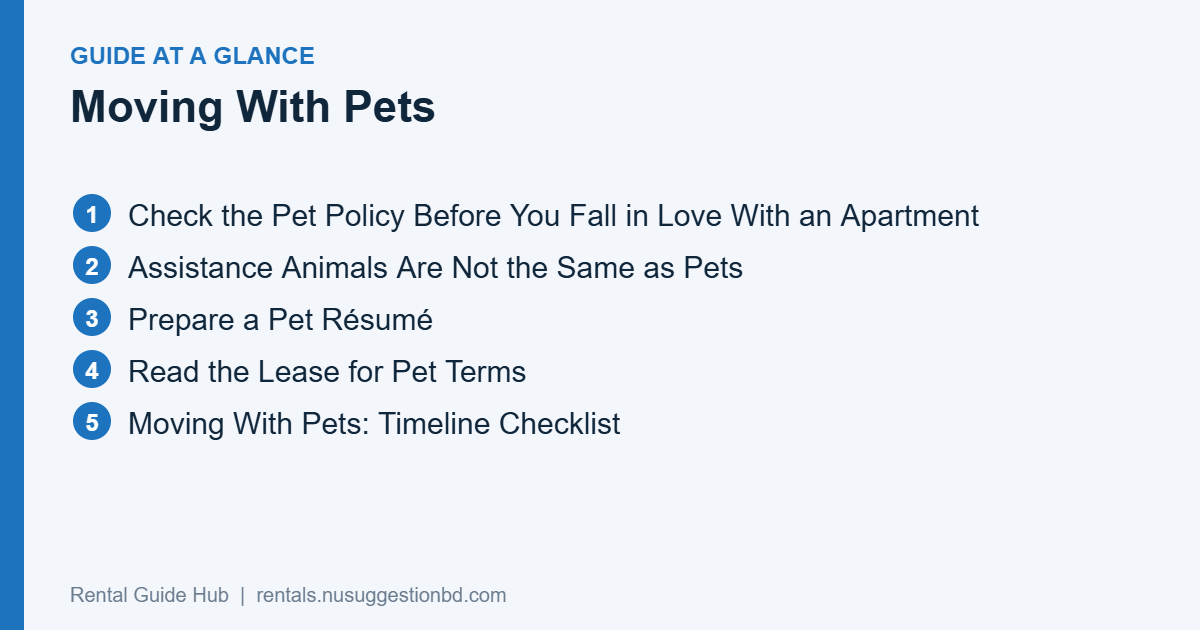
Prepare a Pet Résumé
A short profile can make a landlord more comfortable. Include a clear photo, breed and age, vaccination and microchip details, a reference from a previous landlord or veterinarian, and notes about training or temperament. Add proof that your pet is spayed or neutered if relevant. It will not override a strict building policy, but it can help in a close decision.
Read the Lease for Pet Terms
Pet rules live in the lease or an addendum. Confirm how damage is handled, whether pet deposits are refundable and what happens if your pet has a problem such as barking. The step-by-step approach in How to Read an Apartment Lease Before You Sign applies here, and your security deposit and pet deposit rules should be clear before you pay. If you own a dog, ask your insurer about liability coverage, as explained in Renters Insurance 2026: Best Guide to Coverage and Cost.
Moving With Pets: Timeline Checklist
Four Weeks Before
- Confirm the new building’s pet rules and fees in writing.
- Visit your veterinarian for a check-up and get copies of records.
- Ask about prescriptions, calming aids and travel advice.
- Start getting your pet used to a carrier or crate.
Two Weeks Before
- Update microchip details and ID tags with the new address and phone number.
- Find a new veterinarian and an emergency clinic near the new home.
- Pack your pet’s essentials in a labeled bag, such as food, bowls, medication, toys, litter and waste bags.
- Keep routines steady so your pet is less anxious.
One Week Before
- Pack in stages, and leave your pet’s favorite spots until last.
- Ask a friend or sitter about helping on moving day.
- Check that your carrier or harness fits and is secure.
Moving Day
- Keep your pet in a quiet, closed room or with a trusted sitter while doors are open and movers are working.
- Put a sign on the door so no one lets the animal out by mistake.
- Transport your pet in the car with you, never in the moving truck.
- Bring water, food and a familiar blanket or toy.
Set Up a Safe First Day in the Apartment
- Walk through the home and check for gaps, loose wires, balcony hazards, open windows and anything toxic.
- Set up one room first with a bed, water, food and a litter box if you have a cat.
- Let your pet explore slowly, and keep doors closed until everything is unpacked.
- Take dogs for short walks on a leash to learn the area.
- Keep a regular feeding and walking schedule.
Document any existing damage on move-in so you are not blamed later. The ideas in How to Inspect a Furnished Apartment Before Move-In work for unfurnished homes too.
Be a Good Neighbor
- Introduce yourself and your pet to nearby neighbors.
- Pick up waste promptly and follow leash rules.
- Reduce barking by exercising your dog and providing enrichment when you are away.
- Use a litter routine that controls odor.
- Address complaints calmly and quickly.
Budget for Moving With Pets
Costs add up quickly when you are moving with pets, so build a small budget before you commit to a lease.
- One-time pet fee or refundable pet deposit.
- Monthly pet rent and any required pet insurance.
- Veterinary visits, records and updated vaccinations.
- Carrier, harness, crate or other travel gear.
- New bedding, scratching posts or leashes for the new area.
- Extra cleaning supplies for the move-out inspection.
Add these items to your plan, then compare them with the rent savings you hoped for. Moving with pets can change which apartment is truly the best value.
Plan Travel Days When Moving With Pets Long Distance
For long trips, book pet-friendly lodging early and confirm fees. Plan breaks for water, exercise and bathroom stops, never leave animals in a parked car and carry copies of vaccination records. If you are flying, check the airline rules well in advance, because requirements for carriers, health certificates and weather limits can be strict. Many people find that moving with pets is easier when they split the drive into shorter days and keep feeding schedules steady.
Help Your Pet Adjust After Moving With Pets Into a Small Space
Apartments are smaller than houses, so give your pet a clear routine. Provide vertical spaces for cats, regular walks and puzzle toys for dogs, and a quiet corner for rest. Watch for stress signals such as hiding, loss of appetite or constant barking, and call your veterinarian if they continue.
- Check pet policies, fees and breed limits before you apply.
- Assistance animals are generally treated differently from pets under fair housing rules.
- Update microchip and ID tags, and find a nearby vet before the move.
- Keep your pet in a secure space on moving day and set up a calm room first.
Common Moving With Pets Mistakes to Avoid
- Hiding a pet from the landlord, which can lead to fines or lease violations.
- Forgetting to budget for monthly pet rent and one-time fees.
- Letting a pet roam freely while doors are open on moving day.
- Skipping a move-in photo record of existing damage.
- Waiting until after the move to find a veterinarian.
Moving With Pets at a Glance
The key points on moving with pets are simple: confirm the pet policy and fees in writing, prepare your pet’s records, and plan the first night so your pet settles quickly. Keep this moving with pets summary handy on moving day.
Frequently Asked Questions About Moving With Pets
Can a landlord refuse my pet?
Yes, in most cases. Landlords may set pet policies, including limits and breed restrictions, unless the animal is a service animal or assistance animal covered by fair housing rules. Ask for the policy in writing.
What fees should I expect when moving with pets?
Common costs include a one-time pet fee, a refundable pet deposit and monthly pet rent. Add these to your budget before you compare apartments.
How can I keep my pet calm during a move?
Keep routines steady, introduce the carrier early, use a quiet room on moving day and bring familiar items. Ask your veterinarian about safe calming options if your pet is very anxious.
Should I tell my landlord about a pet I get after moving in?
Yes. Review your lease and request approval first, because unauthorized pets can lead to fines or lease violations.
Where should I start with moving with pets?
Start with the section on “Check the Pet Policy Before You Fall in Love With an Apartment”, then move on to “Assistance Animals Are Not the Same as Pets” and keep short notes as you work through this moving with pets guide.
Final Verdict on Moving With Pets
Moving with pets goes best when you confirm the rules early, budget for the extra costs and plan the details of moving day. Keep your pet safe, update their identification and set up a calm space in the new apartment. A little preparation protects your animal, your deposit and your new home.