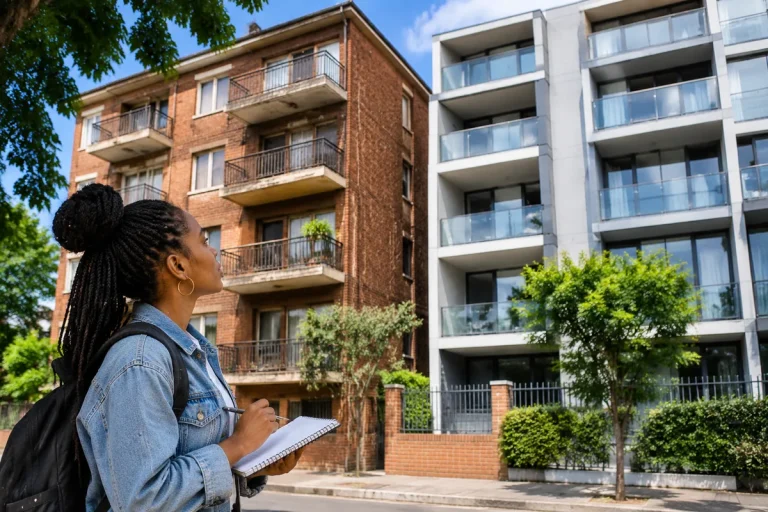
Choosing between a city apartment and a suburban apartment changes your commute, costs and daily routine. Choosing between a city apartment and a suburban apartment is really a choice about how you want your days to work. A city apartment usually puts restaurants, transit and jobs within reach, but it often costs more per square foot and comes with more noise. A suburban apartment tends to offer more space and parking, but it may add commute time and car expenses.
This guide weighs a suburban apartment against a city apartment on cost, space, commute and noise so you can choose with a clear head.

This guide compares the two options across cost, space, commute, noise, safety and lifestyle, then gives you a simple scoring method to decide. If you are comparing specific neighborhoods, pair it with How to Compare Apartment Locations Before You Rent and How to Choose an Apartment Near Public Transportation.
City Apartment vs Suburban Apartment: The Big Picture
- City apartment: shorter distances, more public transit, smaller units, higher rent per square foot, limited parking and more street activity.
- Suburban apartment: more space for the money, easier parking, quieter streets, more car dependence and fewer walkable errands.
Neither choice is better for everyone. The right answer depends on your job location, budget, household and habits. Many renters are happiest when they choose a place that matches their routine rather than an image of the ideal lifestyle.
Compare the Total Monthly Cost
Do not stop at the rent number. A suburban apartment may look cheaper on paper, but a longer commute can add fuel, parking, maintenance and insurance. A city apartment may cost more in rent while letting you skip a car payment. Build a one-month comparison like this:
- Monthly rent and required fees.
- Utilities and internet, using Apartment Utility Costs: What Renters Should Budget For.
- Transportation, including fuel, tolls, parking, passes and ride services.
- Groceries and dining, which may differ by area.
- Storage, if a smaller city apartment forces you to rent space.
- Renters insurance, which can vary by neighborhood.
Example only: if a city apartment costs $300 more per month in rent but lets you sell a car and save $400 in monthly car costs, the city option may be cheaper overall. Replace these numbers with your own, because every household is different.
Space and Layout
Suburban buildings often offer larger floor plans, extra closets, in-unit laundry and sometimes a garage or yard access. A city apartment may have a smaller footprint, so storage, furniture size and layout become important. If you are moving from a bigger home, read Moving Into a Smaller Apartment: How to Downsize Smartly before you commit.
Commute and Transportation
Commute time is one of the biggest quality-of-life factors. Test the route at the hours you will actually travel, not at midnight. In a city apartment you may walk, bike or ride transit, while a suburban apartment often requires a car for most errands. Consider parking costs, guest parking, street cleaning rules and winter conditions where they apply. Tools such as Walk Score can give a rough idea of how much you can do on foot, but nothing replaces a real visit.
Noise, Privacy and Neighbors
A city apartment is more likely to face traffic, nightlife and sirens. A suburban apartment can still have noisy neighbors, so ask about floor level, shared walls and quiet hours. Visit at different times of day, and listen from inside a similar unit if the landlord allows it.
Safety and Neighborhood Feel
Safety varies block by block in both settings. Use local police data, community reports and an in-person walk, and speak to residents when you can. The guide on Apartment Hunting Checklist: What to Check Before You Apply covers questions to ask during a tour.
Amenities, Services and Lifestyle
- Dining and entertainment: typically denser and more varied in a city apartment area.
- Grocery and big-box shopping: often easier to reach by car in suburban areas.
- Green space: parks and trails can be abundant in the suburbs, although many cities have excellent parks too.
- Healthcare, childcare and schools: check access and quality for your own needs.
- Pets: a suburban apartment may offer more room to exercise a dog, while a city apartment may require more walks and pet fees.
Lease Terms and Move-In Costs
Some city buildings charge higher deposits, amenity fees and parking fees. Suburban complexes may offer move-in specials or longer-term discounts. Read the lease line by line with How to Read an Apartment Lease Before You Sign and ask for every fee in writing.
A Simple Scorecard to Decide
Rate each factor from 1 to 5 for both options, then multiply by how much it matters to you.
- List your top six priorities, such as rent, commute, space, noise, safety and amenities.
- Give each priority a weight from 1 to 3.
- Score each apartment from 1 to 5 on every priority.
- Multiply scores by weights and add them up.
- Trust the result, then visit the finalists once more before signing.
- Compare the total monthly cost, including transportation, not only rent.
- A city apartment trades space for convenience, and a suburban apartment trades commute for space.
- Test commute routes and noise levels at realistic times.
- Use a weighted scorecard to avoid choosing on impulse.
Common Suburban Apartment Mistakes to Avoid
- Choosing a city apartment for the neighborhood image and ignoring daily routines.
- Ignoring parking and transit costs.
- Touring only on a quiet weekday morning.
- Forgetting storage needs in a smaller unit.
- Skipping a second visit at night or on a weekend.
Suburban Apartment at a Glance
A suburban apartment usually trades commute time for space and quiet, while a city home trades space for convenience. Decide what matters most, and test a suburban apartment’s real commute before you sign.
Frequently Asked Questions About Suburban Apartment
Is a city apartment always more expensive than a suburban apartment?
Rent per square foot is often higher in a city, but total costs depend on transportation, parking, utilities and lifestyle. Compare the whole monthly budget, not only rent.
Is a suburban apartment safer than a city apartment?
Not automatically. Safety varies block by block in every area, so review local crime information, walk the neighborhood and ask residents before you decide.
Can I live in a city apartment without a car?
Many renters do, especially near good transit and walkable shops. Check your commute and errands before you rely on that plan, and consider occasional car sharing.
When is a suburban apartment the better choice?
It often suits households that need more space, easier parking or a quieter setting, and whose work and daily routines are accessible by car.
Where should I start with suburban apartment?
Start with the section on “City Apartment vs Suburban Apartment: The Big Picture”, then move on to “Compare the Total Monthly Cost” and keep short notes as you work through this suburban apartment guide.
Final Verdict on Suburban Apartment
Choose the location that makes your normal week easier. A city apartment can save time and transportation costs, while a suburban apartment can provide room and calm. Compare real numbers, visit at different times and use a scorecard so the decision is based on your life, not a listing photo.