Photos and floor plans rarely show how an apartment feels at 11 p.m., and they say nothing about thin walls or a dark parking lot. That is why apartment safety and noise checks deserve a place on every tour. A few extra visits and questions can protect your sleep, your belongings and your peace of mind long before you sign a lease.
This guide shows how to check apartment safety and noise yourself during a tour, before you sign anything.
This guide shows how to research apartment safety and noise using public data, in-person visits and smart questions for the landlord. It builds on Apartment Hunting Checklist: What to Check Before You Apply and Questions to Ask Before Renting an Apartment in a New City, so use those lists alongside this one.
Start Your Apartment Safety Research Online
- Look up local crime information. Many police departments publish crime maps or dashboards, and the FBI Crime Data Explorer offers broader trends. Compare the immediate neighborhood, not only the city average.
- Search the address. Look for news about fires, break-ins or repeated problems at the building.
- Read tenant reviews carefully. Focus on patterns, such as repeated reports of broken locks or slow maintenance, rather than a single angry review.
- Check public registries when appropriate. The National Sex Offender Public Website is one public tool, though it does not describe overall neighborhood safety.
- Verify the landlord. Make sure the listing and ownership details are legitimate, as described in How to Spot a Rental Scam Before You Send Money.
Treat online data as a starting point. Numbers can be incomplete or out of date, and they cannot show whether a particular street feels comfortable to you.
Walk the Neighborhood at Different Times
The same block can feel very different on a Tuesday afternoon and a Friday night. Visit at least twice, once during the day and once after dark, and walk the route you would use to reach transit, groceries and parking.
- Is the street well lit, with working lights and clear sightlines?
- Are sidewalks maintained, and do residents seem to use the area?
- Are there empty lots, boarded buildings or loitering that worries you?
- How far is the nearest open business, bus stop or pharmacy?
- Does the parking area feel safe at night?
Check Building Security and Safety Features
On the tour, inspect the physical details that affect apartment safety every day.
- Entrances: working locks, secure doors, a functioning intercom and no propped-open fire doors.
- Your unit: a deadbolt, window latches and a peephole or video doorbell where allowed. Ground-floor and balcony units deserve extra attention.
- Lighting: bright stairwells, hallways, parking areas and building entrances.
- Cameras and access control: ask what exists, how long footage is kept and who monitors it.
- Package areas: secure lockers or a staffed desk reduce theft.
- Lock changes: ask whether locks are changed or rekeyed between tenants.
Fire and Emergency Safety
- Smoke detectors in bedrooms and hallways, and carbon monoxide detectors where required.
- Clearly marked exits, working fire extinguishers and sprinklers where installed.
- Unblocked stairwells and balconies in good repair.
- A clear process for reporting emergencies and urgent repairs.
Requirements differ by location, so review local rules and ask the landlord to confirm that detectors are tested. The U.S. Fire Administration offers practical home fire safety tips for renters.
How to Test Noise Before You Rent
Noise is one of the top reasons renters regret a choice, and it is easy to miss during a short viewing. Use these steps to evaluate it properly.
- Visit at busy times. Go during rush hour, in the evening and on a weekend.
- Stand still and listen. Close the windows, then open them and compare.
- Identify noise sources. Look for main roads, bars, trains, flight paths, loading docks, garbage pickup, playgrounds and mechanical equipment.
- Check the layout. A bedroom beside an elevator, laundry room or shared wall is more likely to be disturbed.
- Ask about floors and walls. Carpet, concrete construction and upper-floor neighbors all affect how sound travels.
- Talk to a current resident. Ask what they hear and how management handles complaints.
Questions to Ask the Landlord
- Are there quiet hours, and how are noise complaints handled?
- Has there been any recent break-in, fire or safety incident in the building?
- How quickly are urgent repairs completed, such as a broken lock or door?
- Is there on-site management or after-hours emergency support?
- What is the pet and guest policy, and are there shared amenities with late-night use?
Get answers in writing when they affect your decision, and read the noise and safety clauses in your lease with How to Read an Apartment Lease Before You Sign.
Compare Two Finalists Fairly
Create a short scorecard for each finalist, rating lighting, entrances, neighborhood feel, noise and landlord responsiveness. If you are choosing between buildings in the same area, How to Compare Apartment Buildings in the Same Neighborhood can help you compare them side by side.
An Apartment Safety Checklist to Use on Every Tour
Bring this list on every visit so you judge each home the same way. Consistent notes make apartment safety comparisons much easier when several places start to blur together.
- Test the front door, deadbolt and window locks in the unit.
- Stand in the hallway and stairwell and check lighting and visibility.
- Look at the parking area and ask how apartment safety is handled after dark.
- Check smoke and carbon monoxide detectors and ask when they were last tested.
- Ask how maintenance requests are submitted and how fast urgent repairs are done.
- Photograph anything that concerns you so you can compare it later.
Strong apartment safety is a mix of good design, active management and neighbors who look out for each other. If a landlord is vague about any of these points, that is useful information too.
- Combine online data with at least two in-person visits, including one after dark.
- Inspect locks, lighting, entrances and fire safety features yourself.
- Test noise at busy times and ask current residents what they hear.
- Put important promises and policies in writing before signing.
Common Apartment Safety Mistakes to Avoid
- Relying only on the listing photos and a daytime tour.
- Treating a single statistic as proof that an area is safe or unsafe.
- Ignoring broken locks or dark hallways during the viewing.
- Assuming a quiet unit stays quiet when the building is full.
- Skipping questions about maintenance response time.
Apartment Safety at a Glance
Good apartment safety checks combine daylight and night visits, working locks and smoke alarms, and an honest test of noise. Repeat your apartment safety checks for each home you compare.
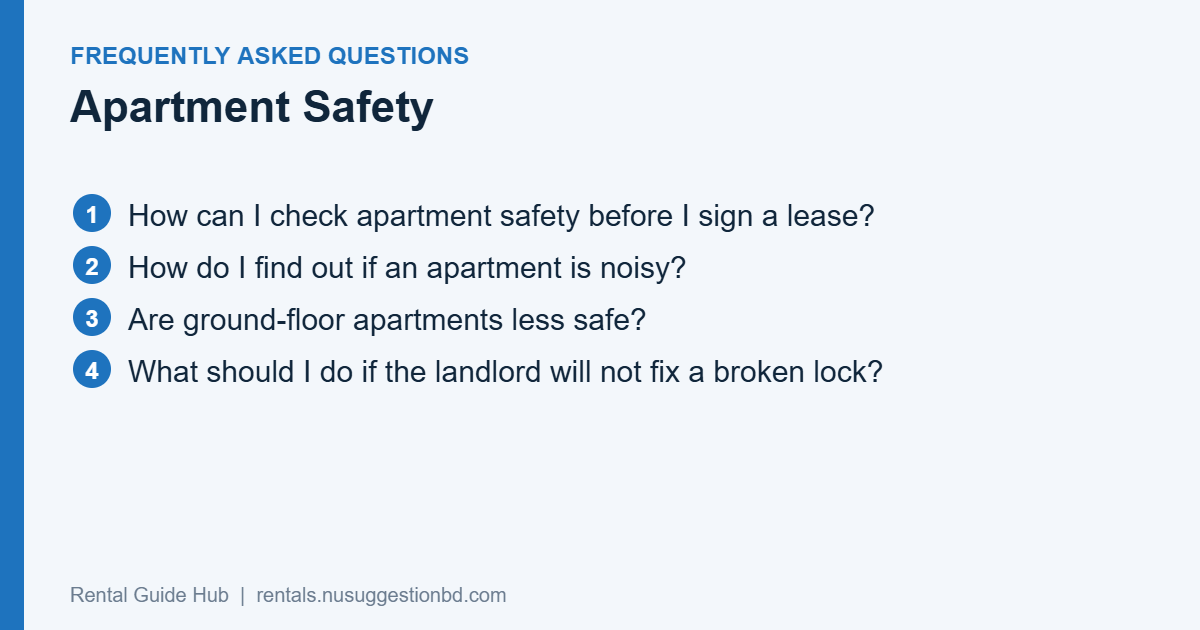
Frequently Asked Questions About Apartment Safety
How can I check apartment safety before I sign a lease?
Combine local crime data, news searches and tenant reviews with at least two in-person visits, one after dark. Inspect locks, lighting and entrances, and ask the landlord about incidents and repairs.
How do I find out if an apartment is noisy?
Visit at rush hour, in the evening and on a weekend, listen with windows open and closed, and ask current residents. Check the layout for shared walls, elevators and laundry rooms.
Are ground-floor apartments less safe?
They can be easier to access, so confirm that window and door locks are strong and that outdoor lighting is good. Many renters feel safe on the ground floor with the right security features.
What should I do if the landlord will not fix a broken lock?
Report it in writing right away, keep copies and follow your local rules for urgent repairs. If the issue is not resolved, contact local tenant resources or housing authorities for guidance.
Where should I start with apartment safety?
Start with the section on “Start Your Apartment Safety Research Online”, then move on to “Walk the Neighborhood at Different Times” and keep short notes as you work through this apartment safety guide.
Final Verdict on Apartment Safety
The best apartment safety checks are practical and repeatable. Research the area, visit at different times, inspect security and fire features, and test noise before you commit. A little extra effort during the search often prevents months of discomfort afterward.