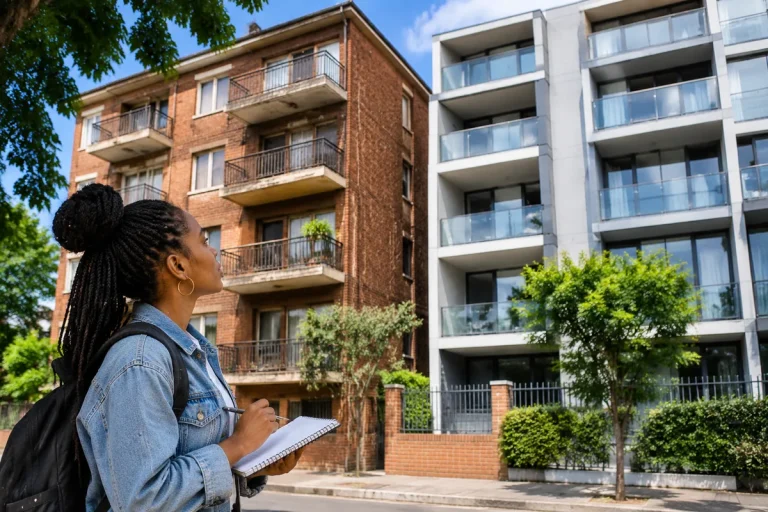
Living near public transportation can save money, reduce stress and give you more freedom, but only if the service actually works for your routine. A station that looks close on a map may involve a long walk, infrequent trains or a route that stops running before you finish work. Before you sign a lease, test the real journey. This guide explains how to choose an apartment near public transportation with checks you can do before you commit.
Use this guide to judge an apartment near public transportation by testing the real walking route and the rush-hour commute.
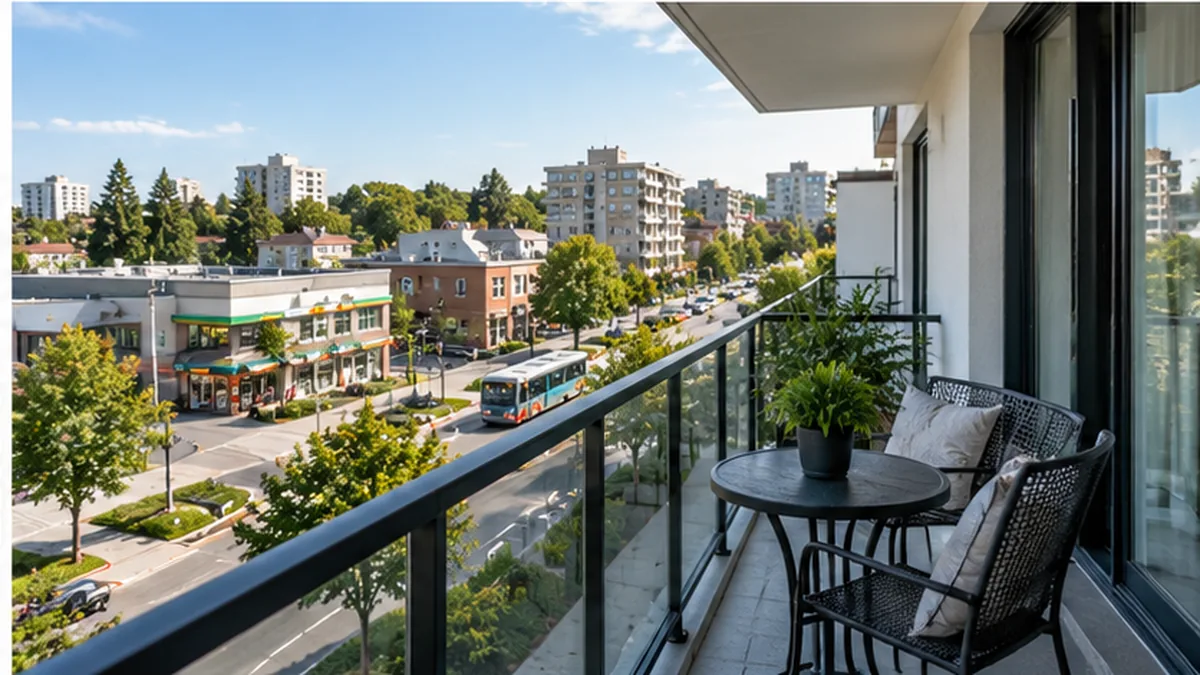
It works well with our guides to comparing apartment locations and city versus suburban apartments.
Measure the Real Walking Route
Distance on a map is not the same as walking time. Walk the route from the apartment door to the stop or station at the time of day you would normally travel. Note hills, busy crossings, missing sidewalks, poor lighting and any barriers. A five-minute walk on paper can become fifteen minutes with waiting at crossings. You can compare walkability using Walk Score.
Check Service Frequency
Look at the timetable for the lines you would use. A train or bus every few minutes feels very different from one every thirty minutes. Check frequency at rush hour, midday, evenings and weekends, because many routes run less often outside commuting hours.
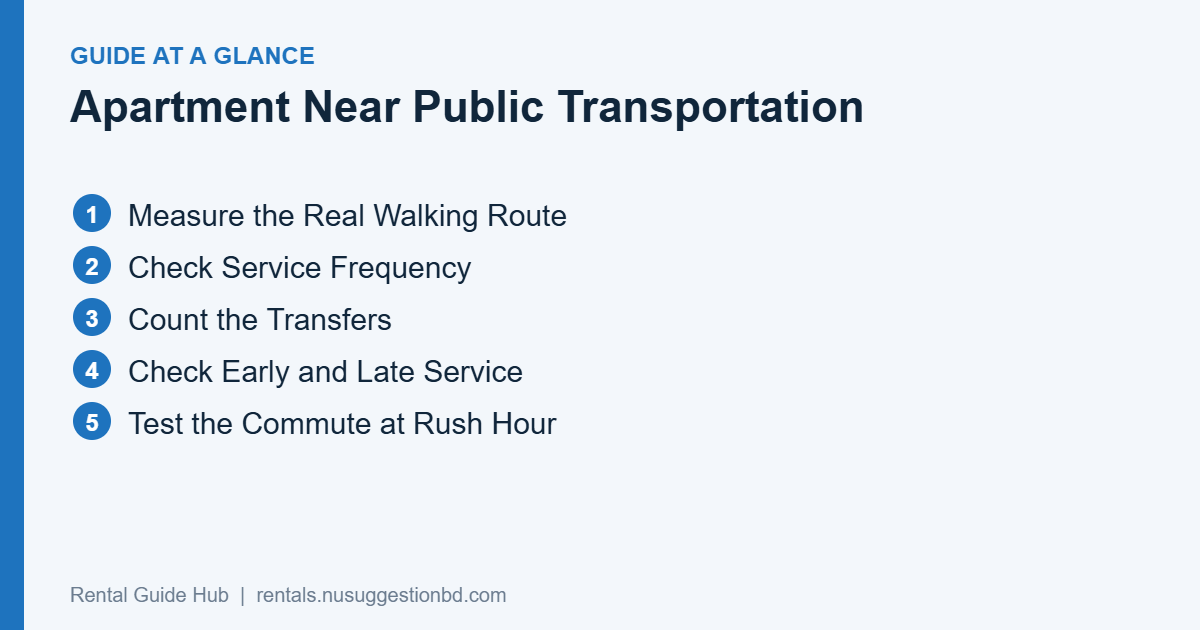
Count the Transfers
Each transfer adds waiting time and a chance of delay. Use a journey planner to test your commute to work, school and other regular destinations. A direct route with a slightly longer ride can be better than a faster route with two transfers.
Check Early and Late Service
If you work early shifts, study late or enjoy evenings out, check the first and last departures. Ask what happens after the last train, such as night buses, ride-hailing or longer walks. Weekend service can also differ from weekday service.
Test the Commute at Rush Hour
Do the commute yourself during a real rush hour, at least once, ideally in both directions. Notice how crowded the vehicles are, how long you wait and whether you can reliably get a seat. A trial run tells you more than any timetable.
Consider Weather and Accessibility
Think about walking and waiting in rain, heat, snow or wind. Check whether stops have shelter and seating. If you use a wheelchair, stroller or carry heavy items, confirm that stations have step-free access and working elevators, and that the sidewalks nearby are accessible.
Think About Safety and Lighting
Walk the route in the evening if you might travel after dark. Look for lighting, activity, visibility and open businesses. You can also check broader local crime information from the FBI Crime Data Explorer and read our safety and noise check guide.
Consider Transit Noise
Being close to transit is convenient, but being too close can be noisy. Visit at busy times and listen for trains, buses, brakes, horns and station announcements. Ask which units face away from the tracks or street, and check window quality.
Compare Rent With Transportation Savings
Apartments near good transit may have higher rent, but you may save on a car, parking, insurance, fuel and maintenance. Compare the total monthly cost: rent, transit fares or passes and, if relevant, car costs. Our guide to how rent compares to income can help you set a budget. The U.S. Census Bureau QuickFacts also shows average commute times for many areas.
Check for Planned Changes
Look at the transit agency’s website for announced route changes, construction, fare changes or service cuts. A line that is convenient today may change, so check whether any changes are planned during your lease.
Consider Bikes, Ride-Hailing and the Last Mile
Transit rarely covers every part of a trip. Check how you would handle the “last mile”: a bike route to the station, secure bike storage, ride-hailing for late nights or a short bus link. If you plan to cycle, look at bike lanes, hills and storage at the apartment and the station. A home with a solid backup plan is more useful than one that only works when everything goes right.
Ask Residents and Neighbors
People who already live nearby can tell you what timetables do not: how often delays happen, which stops feel safe at night, how crowded the trains get and whether a service change is rumored. If you meet residents during a tour, ask about their daily commute. A five-minute chat can reveal more than an hour of research.
Apartment Near Public Transportation Quick Checklist
- Walk the route to the stop at your usual travel time.
- Check frequency at peak, off-peak, evening and weekend times.
- Test the commute to work or school during rush hour.
- Count transfers and check first and last service.
- Check accessibility, lighting and weather protection.
- Listen for transit noise inside the unit.
- Compare rent plus transit costs with car costs.
Common Apartment Near Public Transportation Mistakes to Avoid
- Trusting a map distance. Walk the real route.
- Checking only weekday daytime service. Evenings and weekends can be very different.
- Ignoring transfers and reliability. Delays add up quickly.
- Forgetting noise. Being next to a line may affect sleep.
- Not comparing total costs. Lower transport costs may offset higher rent.
Official Resources for Apartment Near Public Transportation
- Walk Score: Walkability and transit information
- U.S. Census Bureau: QuickFacts
- FBI Crime Data Explorer
Apartment Near Public Transportation at a Glance
The best apartment near public transportation is the one where the real journey works at your times. Test every apartment near public transportation at rush hour and in the evening before you commit.
Frequently Asked Questions About Apartment Near Public Transportation
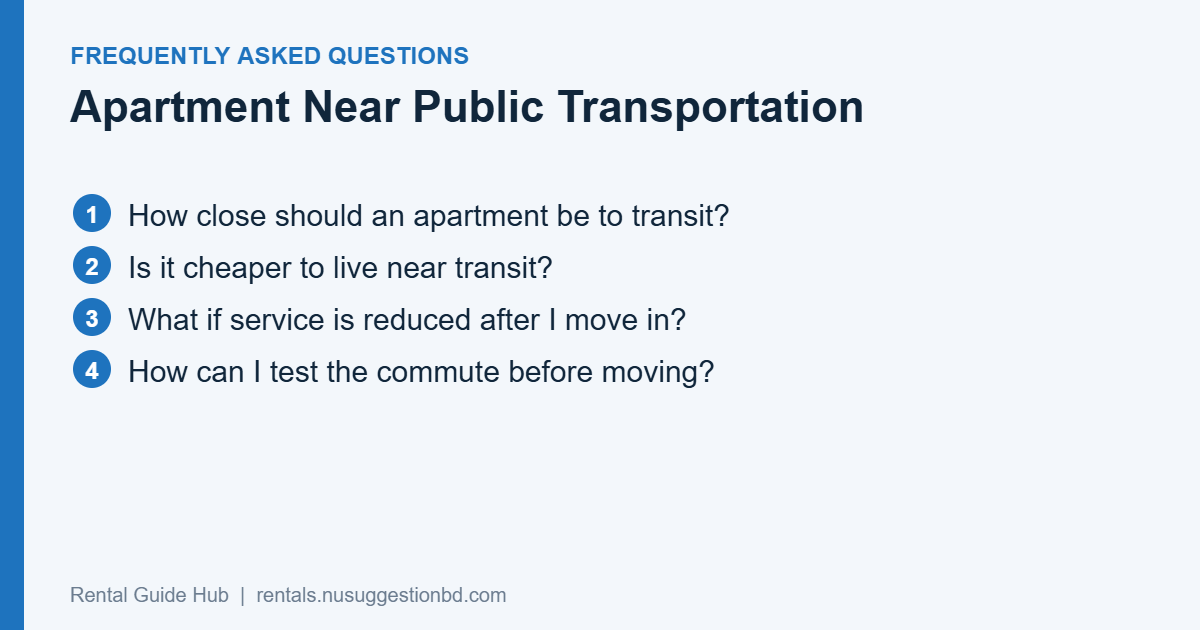
How close should an apartment be to transit?
Many people consider a walk of about ten minutes reasonable, but it depends on the route, weather and your needs. Walk it yourself to decide.
Is it cheaper to live near transit?
Often, but not always. Rent may be higher near good service, and savings depend on whether you can give up or reduce car use. Compare total monthly costs.
What if service is reduced after I move in?
Check the agency’s planned changes before you sign and have a backup plan, such as cycling or ride-hailing for part of the trip.
How can I test the commute before moving?
Use a journey planner for the exact time you would travel, then ride the route once at rush hour. Note the time, crowding and transfers.
Where should I start with apartment near public transportation?
Start with the section on “Measure the Real Walking Route”, then move on to “Check Service Frequency” and keep short notes as you work through this apartment near public transportation guide.
Final Verdict on Apartment Near Public Transportation
The best transit apartment is the one where the journey actually works for your day. Walk the route, test the commute at rush hour, check evening and weekend service, and compare the total cost with car ownership. A few trial trips can save you from a daily frustration. Keep this apartment near public transportation guide handy as a checklist the next time you compare options.