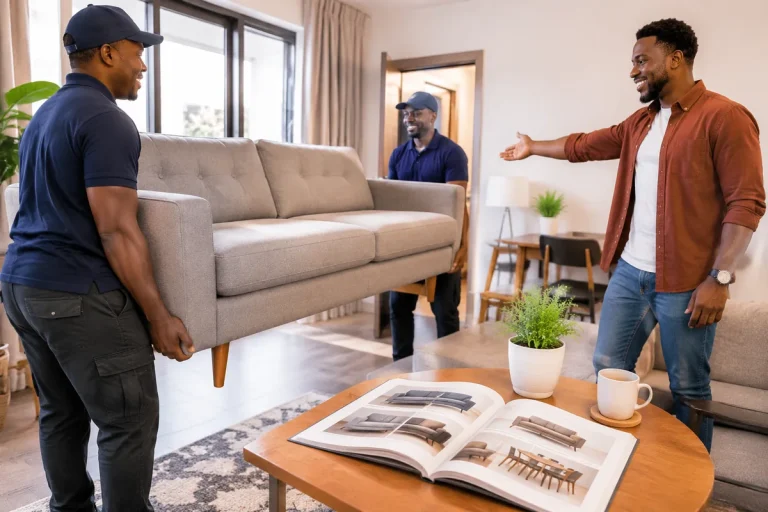
A furnished apartment looks easy: you arrive with a suitcase and everything is ready. But furniture and appliances can be worn, broken or even infested, and if you do not record their condition on day one, you may be blamed for problems that were there before you. A careful furnished apartment inspection protects your deposit, your health and your peace of mind.
Before you unpack, use this checklist to inspect a furnished apartment, record its condition and protect your deposit.
This guide explains what to check, how to document it and what to put in writing. Use it together with our furnished apartment inclusions checklist and our comparison of furnished and unfurnished apartments.
Get the Inventory Before You Arrive
Ask the landlord for a written inventory of everything included: beds, sofas, tables, chairs, appliances, kitchenware, linens, electronics and decor. This list becomes your checklist and your protection if an item is missing or damaged. If there is no inventory, ask whether one can be created at move-in and signed by both sides.
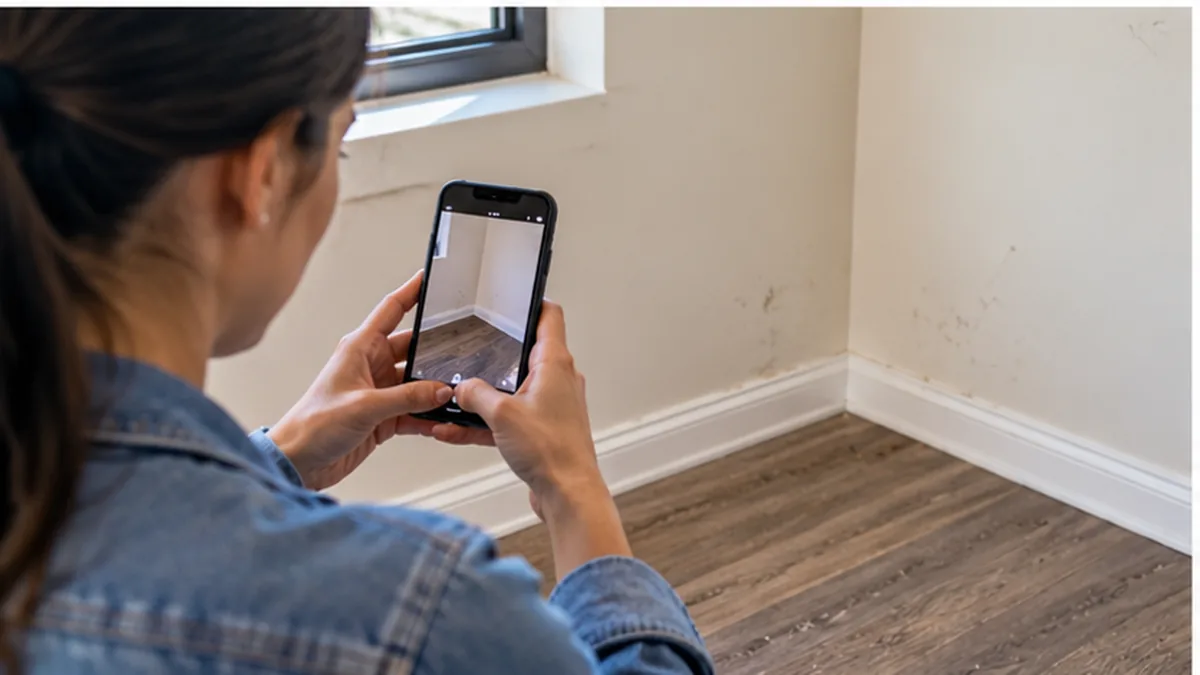
Photograph and Film Everything
Before you unpack, take dated photos and a walk-through video of each room, including close-ups of any damage, stains, scratches or wear. Photograph inside cupboards, wardrobes and appliances too. Save copies to cloud storage and email them to the landlord or manager so there is a time-stamped record. This is the single most useful step you can take if a deposit dispute arises later.
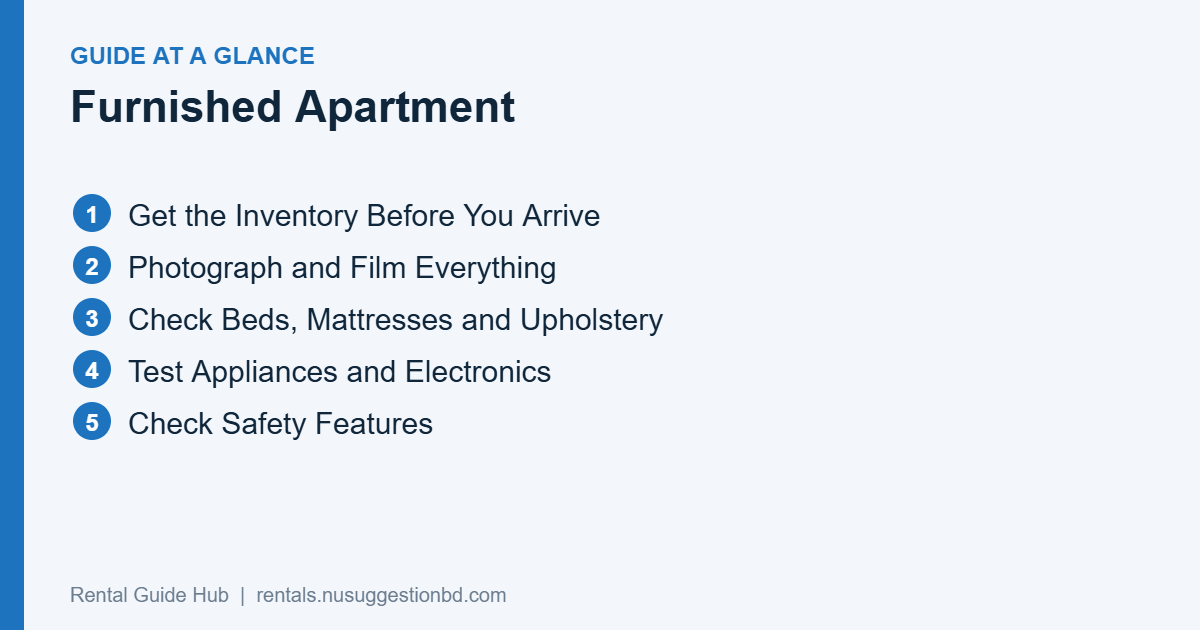
Check Beds, Mattresses and Upholstery
Inspect bedding, mattresses, sofas and soft furnishings for stains, odors, tears and signs of pests. For bed bugs, look along mattress seams, tags, the bed frame, headboard and behind picture frames for small dark spots, shed skins or live insects. If you see any signs, stop and tell the landlord in writing before moving in. The U.S. Environmental Protection Agency provides identification and prevention information.
Test Appliances and Electronics
Run each item rather than assuming it works. Open the refrigerator and freezer and check they are cooling. Turn on every burner and the oven, run the microwave, dishwasher and washer or dryer if provided, and test the kettle, toaster and television. Check heating and air conditioning, ceiling fans and the internet connection. Write down anything that does not work, and report it the same day.
Check Safety Features
- Press the test button on smoke alarms and carbon monoxide detectors.
- Check door locks, window locks and any deadbolts, and make sure you receive all keys.
- Look for exposed wiring, damaged cords, loose outlets and overloaded power strips.
- Check that tall furniture, shelves and televisions are stable and not likely to tip.
- Look for clear exits and make sure windows open properly.
The U.S. Fire Administration offers fire safety guidance for homes. Our guide to apartment safety and noise checks covers more.
Look for Water Damage, Mold and Odors
Run taps and showers, flush toilets and look under sinks for leaks and moisture. Check ceilings, corners and window frames for stains or peeling paint, and notice musty smells, which can indicate hidden moisture. Mold or persistent damp is a reason to ask for repairs before you move in, or to reconsider the home.
Check Windows, Doors and Furniture Condition
Open and close every door, window and drawer. Look for cracked glass, broken blinds, missing screens and damaged hinges. Check the stability of chairs, tables and bed frames, and look for wobbly legs, loose screws and sharp edges.
Complete and Sign a Condition Report
Fill out a written move-in condition report that notes the state of every room and every item on the inventory. Ask the landlord to sign or acknowledge it and keep a copy. Clarify who is responsible for normal wear on furniture, who pays for repairs to items that break through no fault of yours, and how damage will be assessed at move-out. Our security deposit guide explains how deductions work.
Report Problems in Writing Quickly
Send a short email listing every problem you found, with photos attached, as soon as you finish the inspection. Some leases set a deadline for reporting move-in defects, so do not delay. Keep a copy of the message and any reply.
Furnished Apartment Quick Checklist
- Written inventory received and compared item by item.
- Dated photos and video of every room and item.
- Beds and sofas checked for stains, odors and pests.
- All appliances, heating, cooling and internet tested.
- Smoke and carbon monoxide detectors tested; locks and keys checked.
- Leaks, mold and damp checked.
- Condition report signed and problems reported in writing.
Common Furnished Apartment Mistakes to Avoid
- Trusting that “everything is fine.” Look and test for yourself.
- Delaying the inspection. Do it before you unpack so changes are obvious.
- Skipping photos. Without evidence, disputes become your word against theirs.
- Not checking for pests. Problems are easier to resolve before you bring in belongings.
- Not getting the report acknowledged. A condition report no one has seen is of limited use.
Official Resources for Furnished Apartment
- U.S. EPA: Bed bugs
- U.S. Fire Administration: Home fire safety
- HUD: Tenant rights, laws and protections
Furnished Apartment at a Glance
To inspect a furnished apartment well, photograph everything, test every appliance and get the condition report acknowledged. Do this for any furnished apartment before you unpack.
Frequently Asked Questions About Furnished Apartment
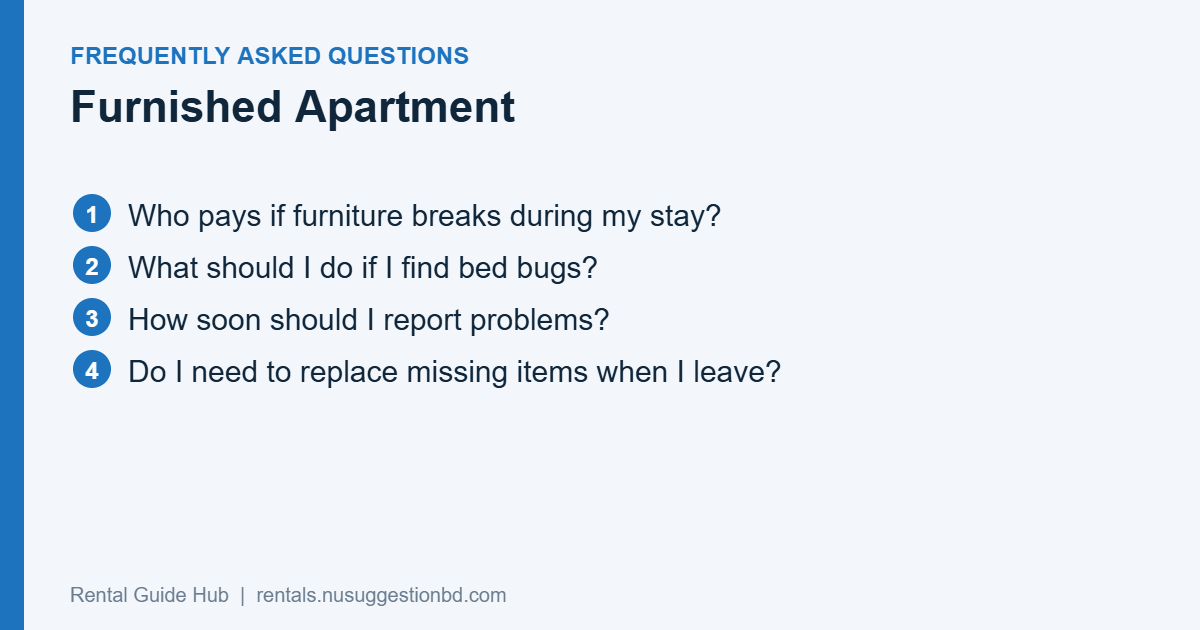
Who pays if furniture breaks during my stay?
It depends on your lease. Normal wear and tear is usually the landlord’s responsibility, while damage caused by misuse may be charged to you. Record the condition at move-in so you can show what was already worn.
What should I do if I find bed bugs?
Do not move your belongings in. Photograph the signs, notify the landlord in writing immediately and ask what treatment is planned. If the problem is not resolved, consider whether you can end the agreement and seek advice from a local tenant organization.
How soon should I report problems?
As soon as possible, ideally on the day you move in. Some leases have a short window for reporting move-in defects.
Do I need to replace missing items when I leave?
If an item on the inventory is missing at move-out, you may be asked to pay for it. That is why a signed inventory and move-in photos are important.
Where should I start with furnished apartment?
Start with the section on “Get the Inventory Before You Arrive”, then move on to “Photograph and Film Everything” and keep short notes as you work through this furnished apartment guide.
Final Verdict on Furnished Apartment
A furnished apartment saves effort only if you start with a clear record. Get the inventory, photograph everything, test appliances and safety features, check for pests and moisture, and put problems in writing. An hour of inspection on move-in day can protect your deposit for the whole stay. Keep this furnished apartment guide handy as a checklist the next time you compare options.