Sharing an apartment can cut your housing costs and make a new city feel friendlier, but it also ties your money, comfort and sometimes your legal obligations to another person. Most roommate conflicts are not about big issues. They come from things nobody discussed in advance, such as guests, cleaning, bills and what happens if someone leaves. A clear roommate apartment checklist helps you settle those questions before you move in.
This roommate apartment checklist covers the lease, money, house rules and safety questions to settle before you move in.
Use this guide to decide who belongs on the lease, how to split costs, what to agree on in writing and how to screen a potential roommate. Read it together with our guide to reading an apartment lease and our questions to ask before renting in a new city.
Decide Who Is on the Lease
There are two common set-ups. In a joint lease, all roommates sign one lease and are usually responsible together for the full rent and for damage, which means one person’s missed payment can become everyone’s problem. In a separate lease or room-by-room arrangement, each person has their own agreement and is responsible for their own share. Ask the landlord which applies, check what the lease says about adding or replacing a roommate, and never assume that being “just a roommate” protects you. Anyone who lives in the home should be named, and anyone named should understand the obligations.
Agree on Money Up Front
Money is the most frequent cause of disputes, so be specific.
- Rent split: Equal shares are simple. If bedrooms differ in size or have private bathrooms, discuss a fair adjustment.
- Security deposit: Decide who pays, who holds the receipt and how it is returned when someone moves out.
- Utilities and internet: Choose who holds each account and how shares are calculated. See our utility costs guide.
- Payment method and deadline: A shared payment app or one person collecting by a fixed date prevents late fees.
- Shared purchases: Agree whether items like cleaning supplies, toilet paper and furniture are shared or personal.
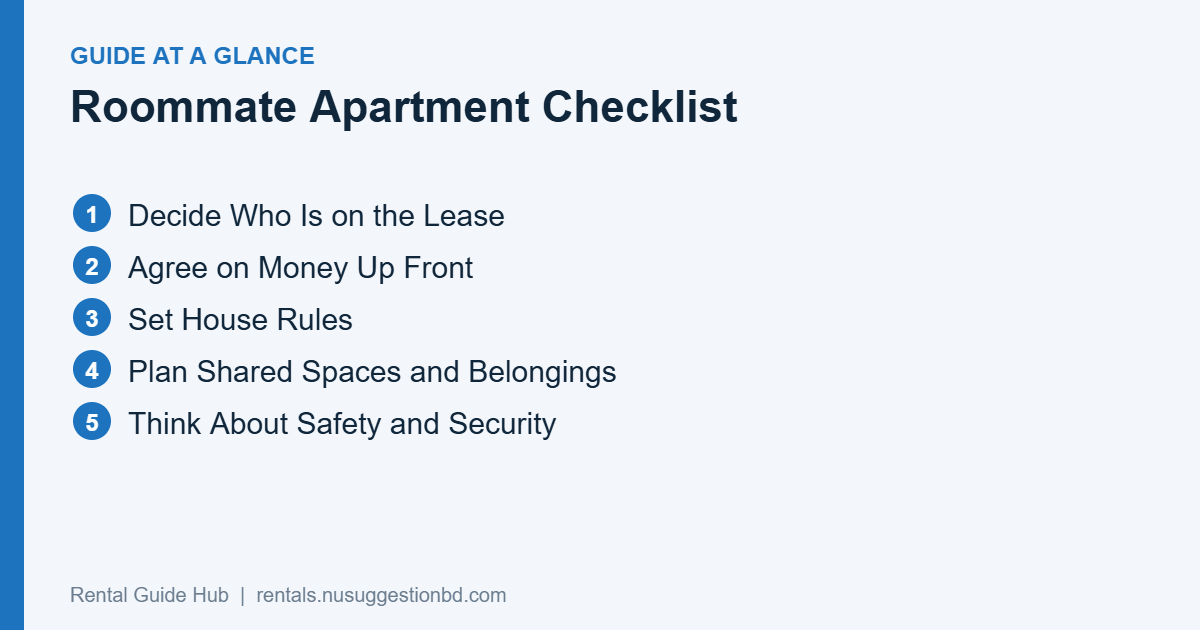
Set House Rules
Talk through everyday habits before they become friction. Cover overnight and extended guests, quiet hours, smoking and vaping, pets, parties, cleaning schedules, kitchen use and how you will handle noise. People often assume their own habits are normal, so say them aloud. If you have different sleep patterns or work-from-home needs, discuss how to keep shared areas comfortable for everyone.
Plan Shared Spaces and Belongings
Decide how you will share the kitchen, fridge, bathroom, living room and storage. Agree what counts as private, such as bedroom doors and personal food, and what is communal, such as the sofa or cookware. If someone brings furniture, note who owns it so there is no confusion later.
Think About Safety and Security
Agree on how keys, entry codes and locks are handled, including what happens if someone loses a key. Decide whether guests may be given access. Confirm that smoke and carbon monoxide detectors work and that everyone knows how to report maintenance issues. Our guide to apartment safety and noise checks explains what to look for.
Put a Roommate Agreement in Writing
A written agreement is not about distrust. It keeps everyone’s memory aligned. It does not replace the lease, but it records what you decided. Include:
- Names, move-in date and each person’s share of rent and bills.
- How and when payments are made, and what happens if someone is late.
- Rules about guests, quiet hours, cleaning and shared items.
- How to give notice if someone wants to leave and who finds a replacement.
- How the security deposit is divided at move-out.
- How disagreements will be discussed, for example a house meeting.
Screening a New Roommate
If you are looking for a roommate rather than moving in with a friend, meet in person or on a video call and talk about routines and expectations. Ask for references, confirm that they have steady income or a clear way to pay, and ask about prior rental history. Verify identity before sharing sensitive information. Be alert to scams: never send money to someone you have not met or to a person who cannot show you a real lease. Our guide to spotting a rental scam lists the red flags.
If a Roommate Moves Out
Read what your lease says about replacing a tenant. Often the landlord must approve a new person, and the person leaving may remain responsible until the lease is updated. Agree on notice time, who pays during the gap, how the deposit is handled and how the replacement will be screened. Doing this calmly and in writing protects everyone.
Roommate Apartment Checklist: Final Review
- Who is on the lease, and is it joint or separate?
- How are rent, deposit, utilities and internet split and paid?
- What are the rules on guests, quiet hours, cleaning and smoking?
- Who owns which furniture and appliances?
- How are keys, locks and repairs handled?
- What happens if someone leaves early?
- Is the agreement written down and signed by everyone?
Common Roommate Apartment Checklist Mistakes to Avoid
- Skipping the awkward conversation. Silence about money or habits usually leads to resentment.
- Ignoring joint liability. You may be responsible for the whole rent even if a roommate does not pay.
- Relying on verbal agreements. Memories differ; writing helps.
- Not checking the other person’s finances. A roommate who cannot pay their share puts you at risk.
- Splitting furniture and bills informally. Informality causes confusion at move-out.
Official Resources for Roommate Apartment Checklist
- HUD: Tenant rights, laws and protections
- FTC: How to avoid rental listing scams
- 211: Find local housing and legal aid help
Roommate Apartment Checklist at a Glance
A good roommate apartment checklist settles the lease type, money, house rules and what happens if someone leaves. Put your roommate apartment checklist answers in writing and have everyone sign.
Frequently Asked Questions About Roommate Apartment Checklist
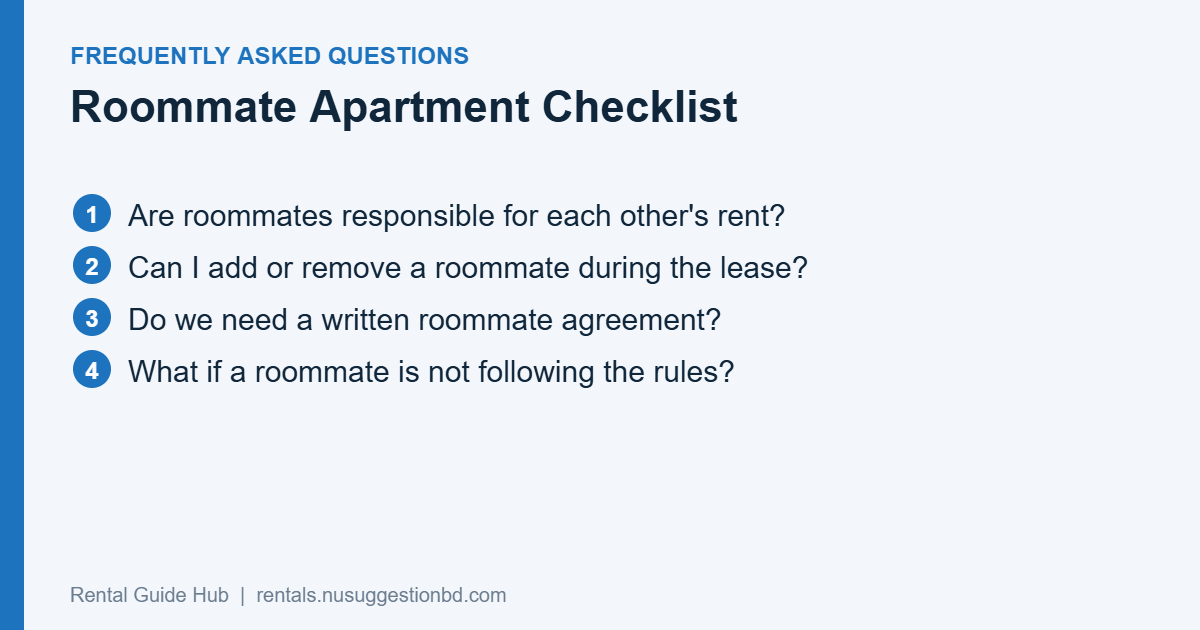
Are roommates responsible for each other’s rent?
Under many joint leases, yes. Each tenant may be liable for the full amount if the others do not pay. Read the clause on liability and ask the landlord to explain it if you are unsure.
Can I add or remove a roommate during the lease?
Usually only with the landlord’s written permission. Removing someone from the lease or adding someone new often requires an amendment, and the landlord may screen the new person.
Do we need a written roommate agreement?
It is not required, but it is strongly recommended. It records your rules and money arrangements and gives you a reference if there is a disagreement.
What if a roommate is not following the rules?
Start with a calm conversation and refer to the agreement. If the problem continues, hold a house meeting. For serious issues, such as safety or lease violations, check what the lease allows and consider talking to the landlord or a tenant organization.
Where should I start with roommate apartment checklist?
Start with the section on “Decide Who Is on the Lease”, then move on to “Agree on Money Up Front” and keep short notes as you work through this roommate apartment checklist guide.
Final Verdict on Roommate Apartment Checklist
A good roommate arrangement depends on clear expectations, not luck. Decide who is on the lease, split money fairly, agree on shared rules and write everything down. A short conversation before you sign can prevent months of conflict. Keep this roommate apartment checklist guide handy as a checklist the next time you compare options.