Rent is a major expense for any student, and a part-time job can make a real difference. Student jobs in the USA range from campus library shifts to research and internships, but the rules are very different for international students than for US citizens, so it pays to know your limits before you apply.
This guide explains student jobs in the USA with a focus on international students on F-1 visas: where you can work, how to find jobs, what paperwork you need and how to use your pay for rent. It is general information, not legal or immigration advice. Your school’s Designated School Official (DSO) is the authority for your own situation.
Know Your Work Limits First
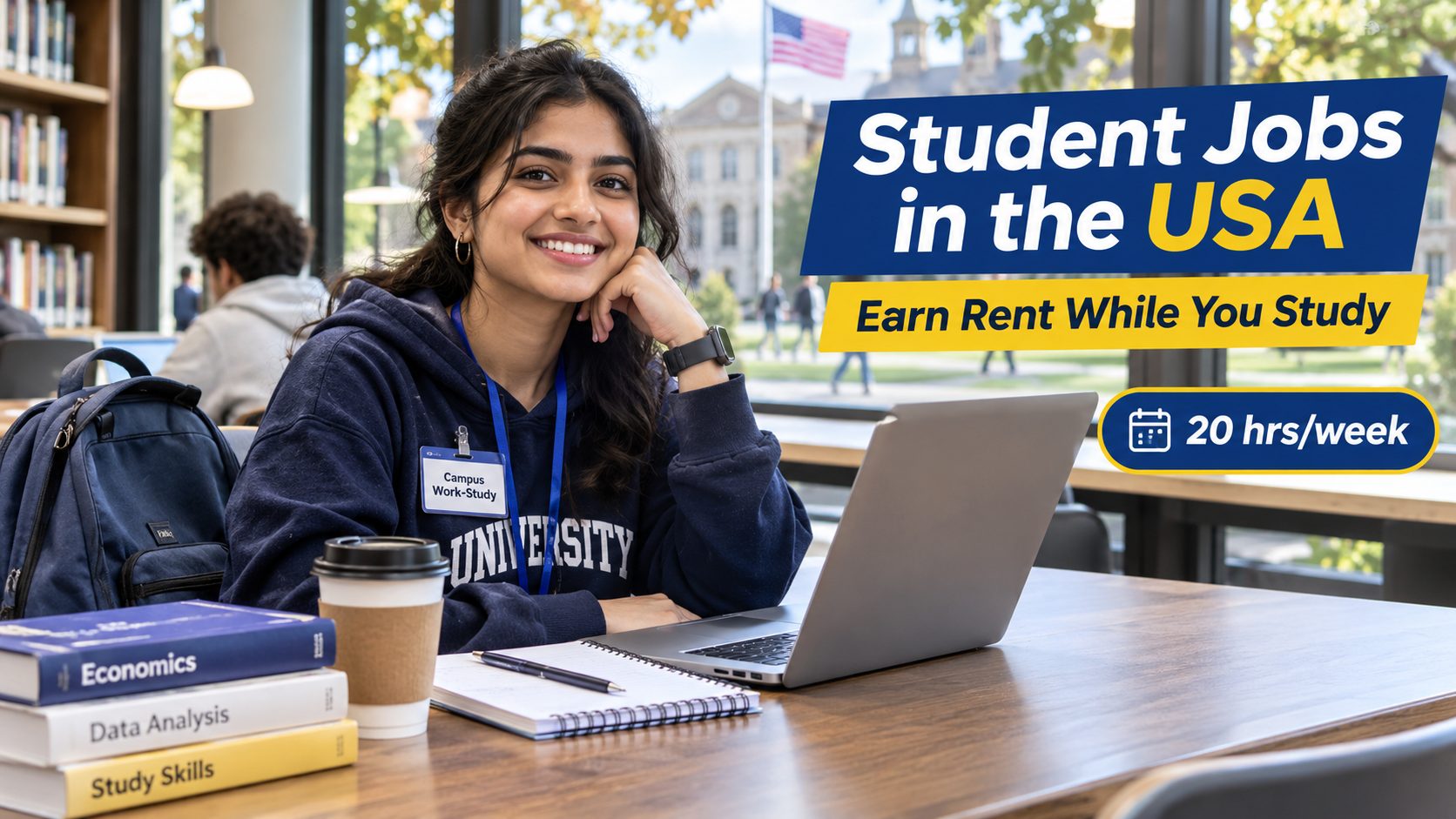
If you are on an F-1 student visa, you may generally work on campus up to 20 hours a week while classes are in session, counting all on-campus jobs together, and full time during official school breaks if you plan to return. Off-campus work requires specific authorization. Working without permission, or working more hours than allowed, can put your student status at risk. US citizens and permanent residents face far fewer limits. For the details, read our guide to international student work rules.
On-Campus Student Jobs That Help With Rent
On-campus work is the easiest place to start because it does not need a separate USCIS application for F-1 students. Common roles include:
- Library or archive assistant.
- Dining hall, campus café or bookstore staff.
- Recreation center or front-desk attendant.
- Tutor or writing center consultant.
- IT help desk assistant.
- Department office assistant.
- Research assistant or teaching assistant, mostly for graduate students.
- Residence hall assistant, a role that often includes a housing benefit.
Pay, hours and the number of openings vary a lot by school, so ask early.
Off-Campus Options and Their Rules
Off-campus work for F-1 students is limited. Curricular Practical Training (CPT) allows internships related to your degree with DSO approval, and Optional Practical Training (OPT) allows work related to your field with authorization from USCIS. Both generally require one academic year of study first, with some exceptions for certain graduate programs. Freelance work, gig apps and self-employment usually need authorization too, so check with your DSO before you accept any job. See the Study in the States and ICE practical training pages for the official rules.

How to Find Student Jobs
- Visit your school’s student employment office or career center, which often lists on-campus openings.
- Check the job platforms your school uses, such as Handshake at many universities.
- Look at department websites and ask professors about research or assistant positions.
- Attend campus job fairs at the start of each term, because many positions fill quickly.
- Build a professional profile for internship searches once you are eligible for CPT.
Getting Hired: Resume and Interview Basics
US employers expect a short, clear resume, usually one page, without a photo, age or marital status. Highlight your studies, relevant skills and any volunteer or work experience. Prepare a short cover letter, list references and practice a few common interview questions. Ask in the interview how many hours per week are typical and when you are paid. Keep track of your total weekly hours across all on-campus jobs so you stay under the limit.
Social Security Number and Paperwork
To be paid in the US, you generally need a Social Security Number (SSN). F-1 students are not automatically eligible; you can usually apply only after you have a job offer. Typical documents include your passport, Form I-20, I-94 record, a job offer letter and a letter from your DSO. Apply no earlier than about 30 days before your start date and follow your school’s steps. Many schools allow you to start working while the SSN application is processed, and your employer will also ask you to complete Form I-9 on or near your first day. The Social Security Administration website has the official details.

Pay, Taxes and Banking
Most student employers pay every two weeks or monthly, and taxes are usually withheld from your pay. International students often have special tax rules, and some must file certain forms even without income, so ask your school’s international office or a qualified tax professional. A US bank account makes it easier to receive direct deposits, and our guide to student rent budgets shows how to plan your monthly money.
Using Your Pay for Rent
Be realistic. As an illustration, a job paying $15 an hour for 20 hours a week earns about $1,290 a month before taxes. In many cities that does not cover rent alone, so students combine wages with scholarships, savings, family support and shared housing. Read about roommate arrangements and the costs of off-campus housing before you sign a lease.
Avoid Job Scams
Students are frequent targets of fake job offers. Be careful with employers who send you a check and ask you to wire back part of it, ask for money to get hired or request your Social Security number before a real offer. Verify any employer through your school’s career or international office, and read our guides to spotting a rental scam and loan scams, since the same red flags apply.
Student Jobs in the USA at a Glance
The safest student jobs in the USA for international students are on-campus jobs within the 20-hour limit, while off-campus work needs authorization first. Whichever of the student jobs in the USA you choose, confirm the rules with your DSO, keep records of your hours and never accept cash-only offers that skip the paperwork.
Student Jobs in the USA Checklist
- I confirmed my work limits with my DSO.
- I know my weekly hour cap across all on-campus jobs.
- I have my I-20, passport and other documents ready.
- I know the steps to apply for a Social Security Number.
- I checked that the employer is real and pays through payroll.
- I have a plan to use my pay for rent and savings.
Common Mistakes to Avoid
- Working over 20 hours during the term. It can put your status at risk.
- Accepting off-campus work without authorization. Ask first.
- Taking cash-only jobs. They skip the required paperwork.
- Counting on wages alone for rent. Plan for other income.
- Paying a fee to get a job. Real employers do not charge you.
Official Resources for Student Jobs in the USA
- Study in the States: Working in the United States
- USCIS: Students and employment
- ICE: Practical training for F-1 students
- Social Security Administration
Frequently Asked Questions About Student Jobs in the USA
Can international students work more than 20 hours a week?
Not on campus while classes are in session. During official breaks, full-time work is generally allowed if you plan to return, and some authorized practical training can differ. Confirm with your DSO.
Do I need a work permit for an on-campus job?
F-1 students generally do not need a separate USCIS application for on-campus work, but you need your school’s approval process and an SSN to be paid.
Can I work off campus in my first year?
Generally no, apart from limited special situations. Most off-campus options open after one academic year in status.
How much do student jobs pay?
Pay depends on the school, the role and your state’s minimum wage. Ask the hiring office for the hourly rate and the typical weekly hours before you accept.
Are student jobs in the USA open to every student?
Student jobs in the USA exist for most students, but the rules differ by status. International students on F-1 visas have hour limits and authorization rules, while citizens and permanent residents have far fewer limits. Ask your school which student jobs in the USA fit your status.
Final Verdict on Student Jobs in the USA
Student jobs in the USA can ease your rent burden, but only when they fit your visa rules. Start on campus, stay under the hour limit, apply for your SSN with your DSO’s help and be wary of any offer that sounds too easy. This guide is general information, not legal or immigration advice. For decisions about your own status, speak with your Designated School Official or a qualified immigration attorney.